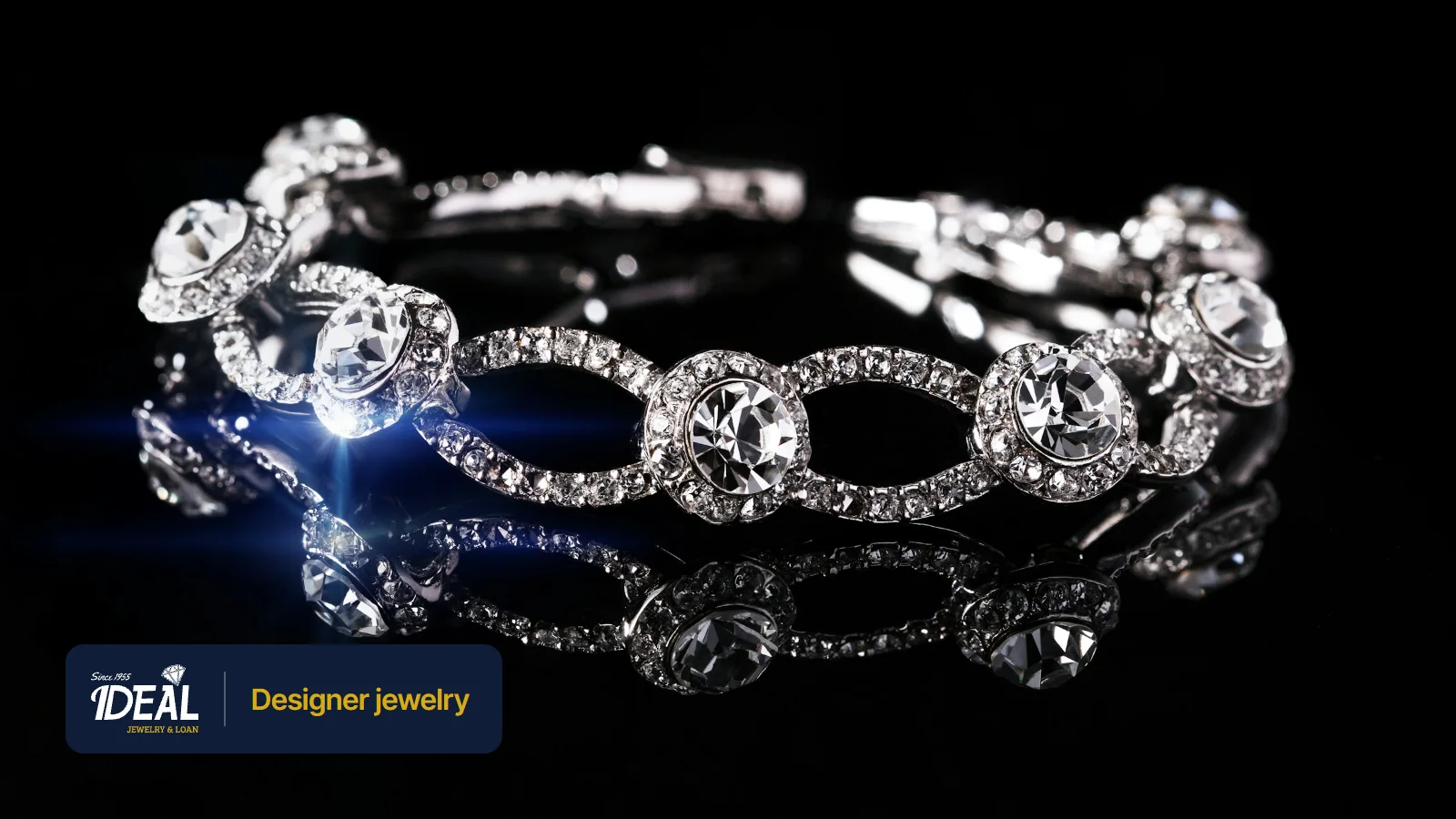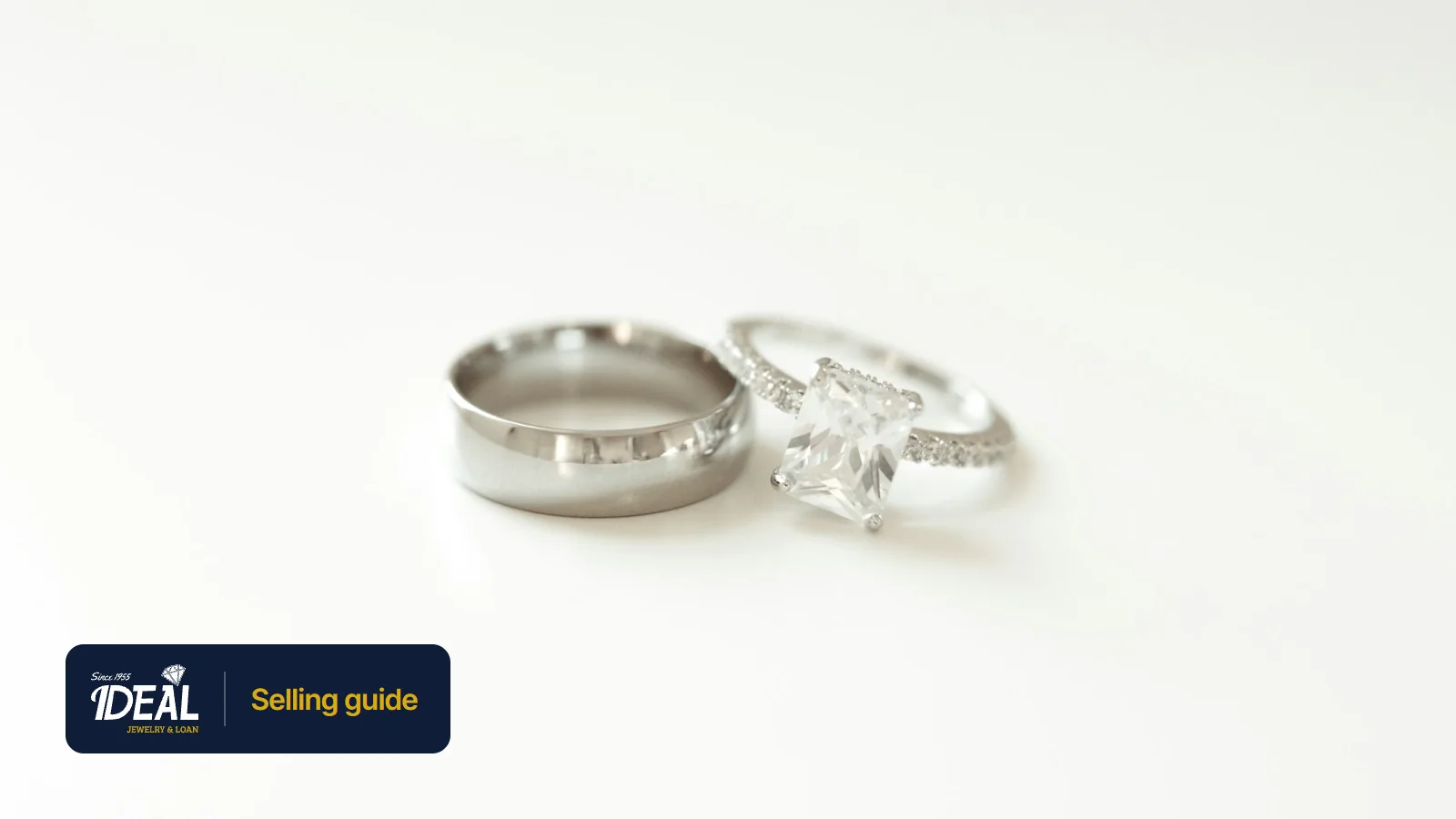

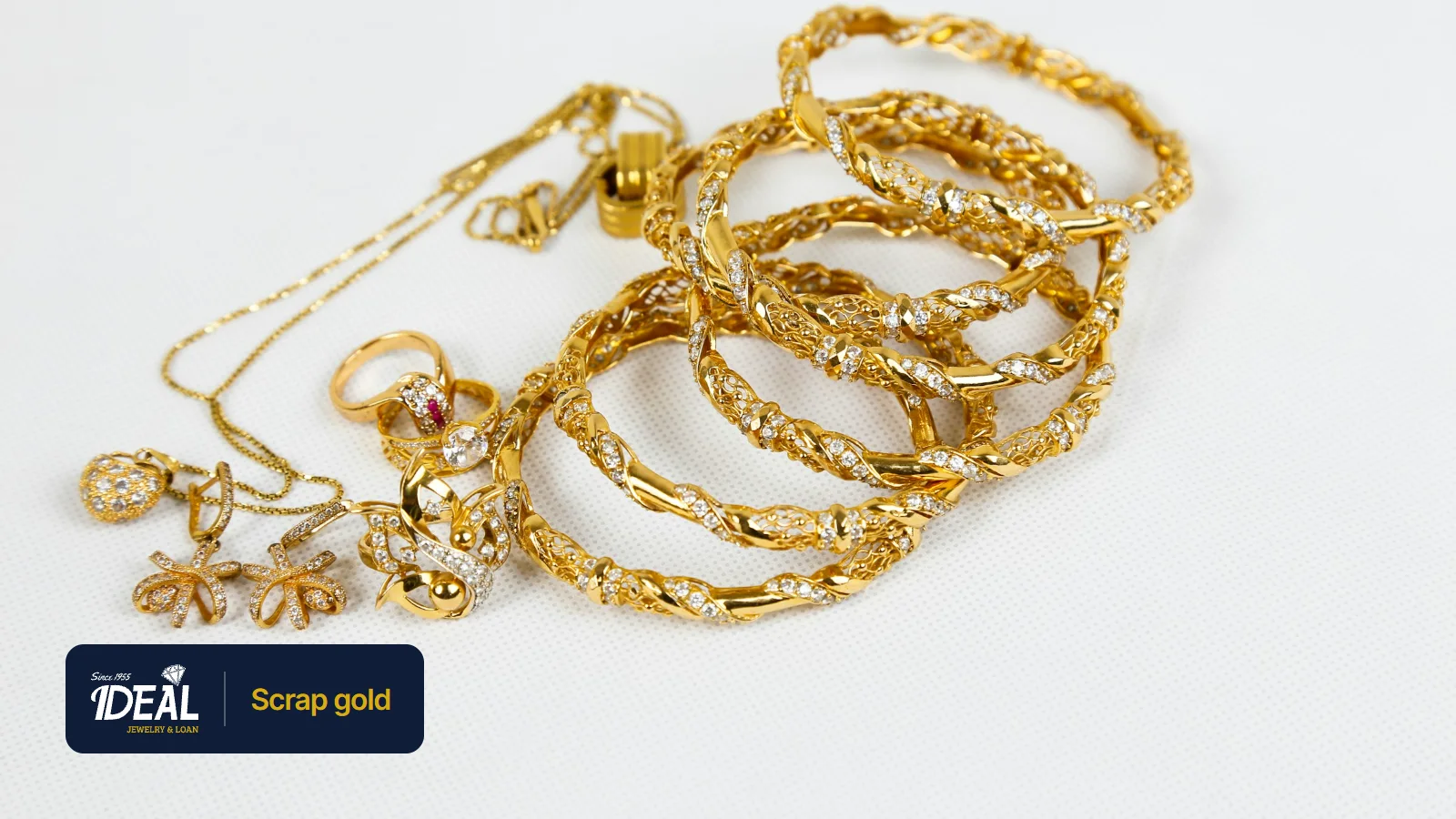
A gold chain that snapped at the clasp. A single earring whose partner went missing years ago. A ring that is bent out of round or cracked through the band. A charm that fell off because its small jump ring gave way. Most people put pieces like these in a drawer and assume they are worth very little now.
For gold, that assumption is usually wrong. Broken gold is valued mainly by the gold in it, and a break does not remove any gold. This guide covers how to sort what you have, how to spot pieces that only look like gold, how to estimate the value, and whether to repair, borrow against or sell.
Why a Break Usually Does Not Lower the Gold Value
When gold jewelry is bought for its metal, three things set the gold value: the karat, which tells you how much of the metal is pure gold, the weight, and the price of gold that day. A chain in two pieces holds the same gold as it did in one, and so does a bent ring or a crushed hoop. Our own pages list condition among the factors in an offer, but a break does not reduce the gold a piece contains.
What can lower the number is missing metal. A lost clasp or a charm left in another drawer is gold you are not bringing in, so gather every part before you go.
For the same reason, do not pay to repair a piece you plan to sell for its gold. The buyer is paying for the gold content, and a soldered link or a new clasp adds little or nothing to it.
There is one real exception: some pieces, such as signed designer pieces and antiques, can be worth more as jewelry than as gold. Our gold price per gram calculator page lists collectible or resale value among the things that affect a final offer, so ask about that before a piece is valued as scrap.
Sort Your Pieces by Karat
Look for a stamp, with a magnifying glass if you have one: on a chain, check the clasp and the small tag near it; on a ring, the inside of the band; on an earring, the post.
| Stamp | What it means | Share that is pure gold |
|---|---|---|
| 10K or 417 | 10 karat gold | 41.7% |
| 14K or 585 | 14 karat gold | 58.3% |
| 18K or 750 | 18 karat gold | 75% |
| 22K or 916 | 22 karat gold | 91.7% |
| A karat followed by GF, GP, RGP or GEP, such as 12K GF | Gold-filled or gold-plated | A gold layer over another metal, not solid gold |
The percentages are karat math: pure gold is 24 karat, so 14 karat is 14 parts gold in 24. Color does not change this: 14K white gold and 14K yellow gold hold the same share.
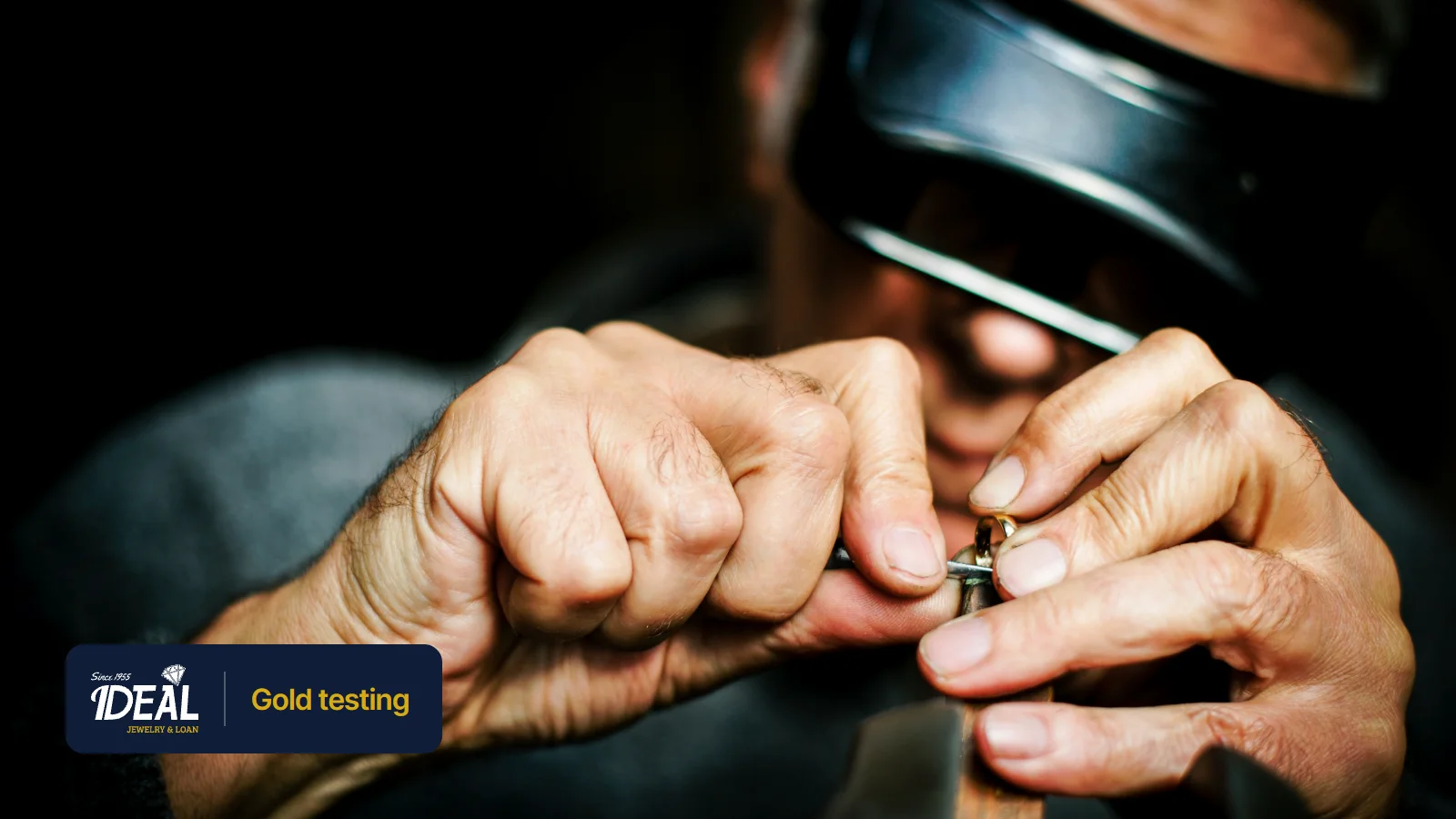
Put each karat in its own bag, and unmarked pieces in another. Each group can then be weighed and priced at its own karat, and you can check the math on any offer. A stamp is a strong clue but not proof, because marks wear away and are occasionally wrong, which is why a buyer tests the metal. So never throw out an unmarked piece before it is tested.
What Is Not Solid Gold
Under the Federal Trade Commission’s Jewelry Guides, several common marks describe a layer of gold alloy over another metal, and the karat in the mark refers to that layer, not to the whole piece.
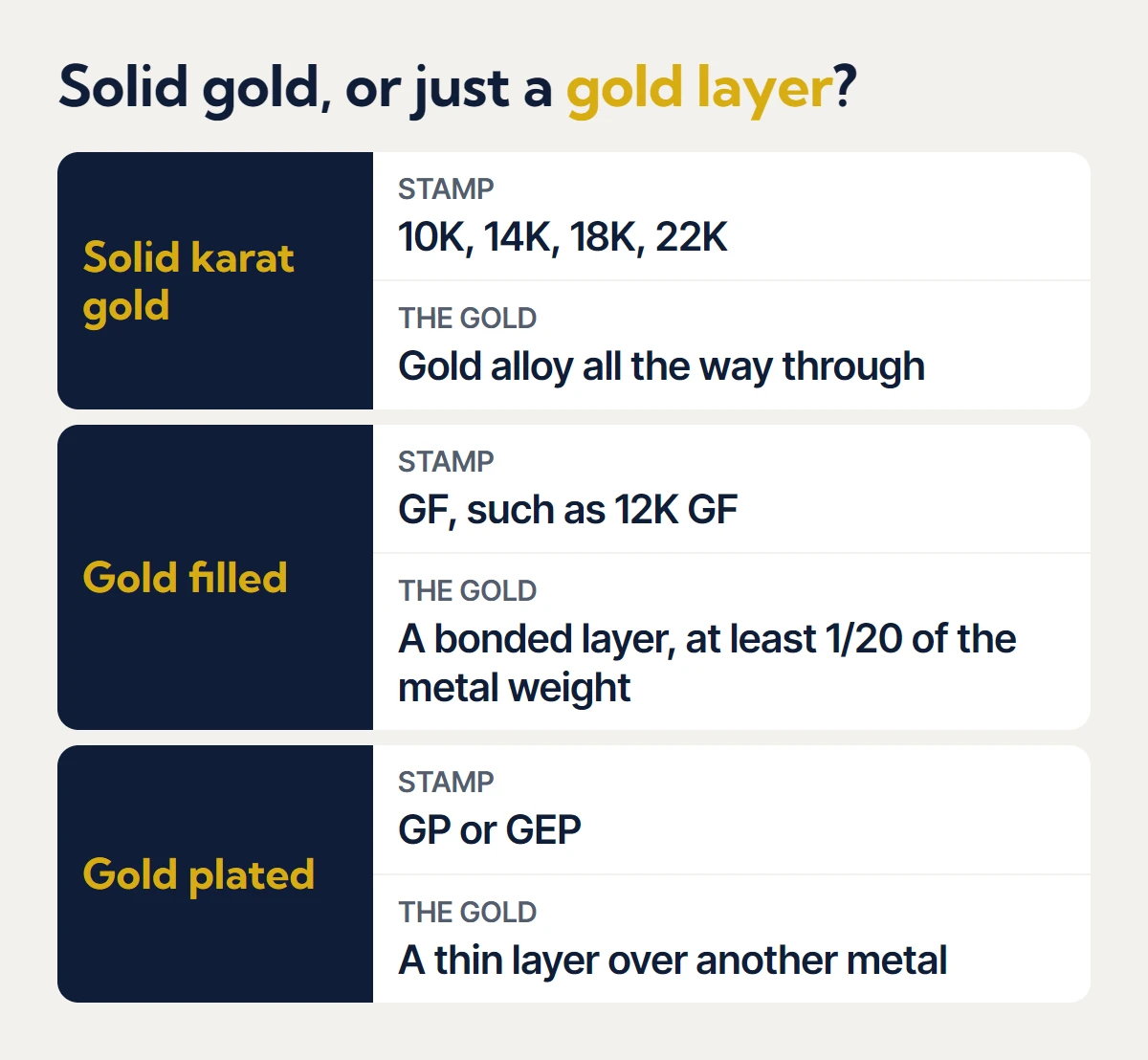
- Gold filled (GF). Under 16 CFR 23.3, the gold layer is at least 10 karat, bonded by a mechanical process, and makes up at least 1/20th of the weight of the metal in the whole piece. So a 20-gram 12K gold-filled chain may carry as little as 1 gram of 12K gold, which is half a gram of pure gold.
- Rolled gold plate (RGP) or gold overlay. A bonded layer of at least 1/40th of the metal weight.
- Gold plate (GP) or gold electroplate (GEP). Gold plate can mean a bonded layer or an electroplated one, and electroplate need only be equivalent to 0.175 microns of fine gold, which the regulation puts at about 7 millionths of an inch.
- Vermeil. Under 16 CFR 23.4, vermeil is sterling silver coated with gold of at least 10 karat. Underneath, it is silver.
Costume jewelry with a gold color and no karat mark can be almost any metal. Buyers differ on gold-filled pieces, so ask before you bring a bag of them in.
Hollow chains, hoops and bangles are a different case: they are real karat gold with an empty center, and the FTC guides say they should not be described as “solid” gold. They simply hold less gold than their size suggests.
How to Estimate the Value of Your Broken Gold
You can work out a rough figure at home.
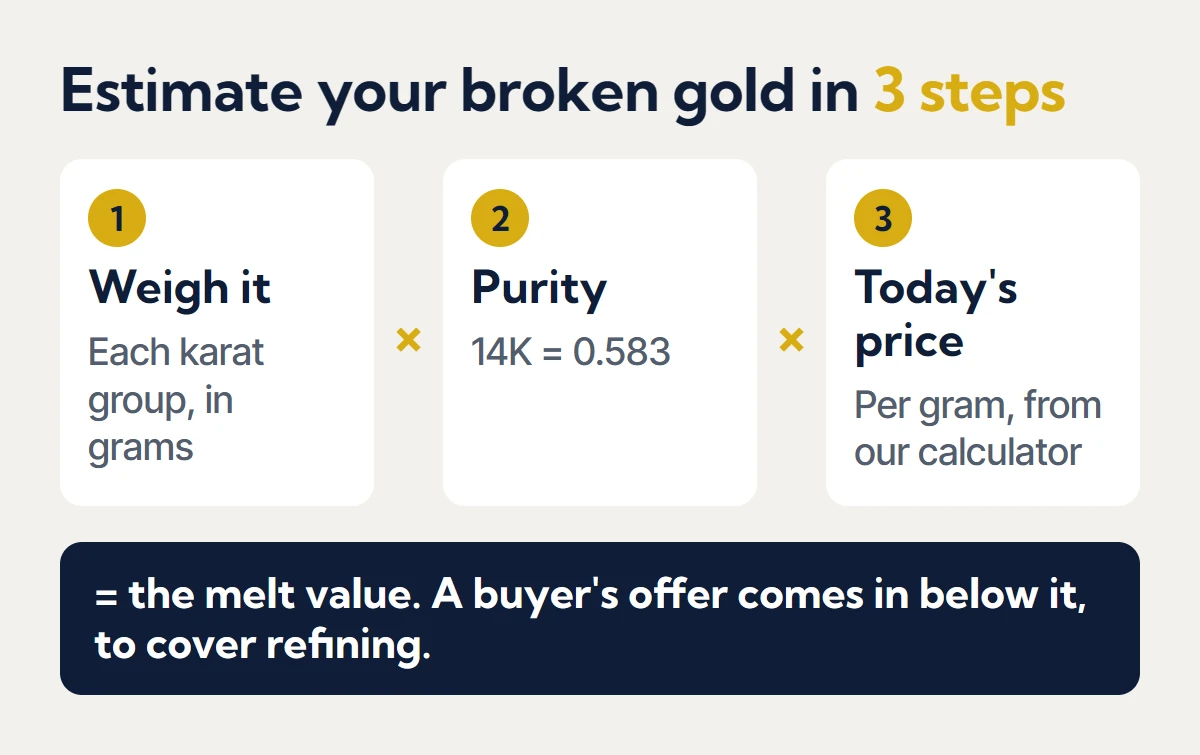
- Weigh each karat group. A small digital scale that reads to a tenth of a gram gives a closer number than a kitchen scale. Stones add weight that is not gold, so set pieces will read high.
- Multiply by the purity. For example, 8 grams of broken 14K chain times 0.583 is about 4.67 grams of pure gold.
- Multiply by the day’s gold price per gram. Our scrap gold calculator does this step with the current market price. Enter the weight in grams, troy ounces or pennyweight and choose the karat.
That figure is the melt value: what the pure gold in your pieces is worth at the market price. A buyer’s offer will be below it. Scrap has to be melted and refined before the gold can be sold on, and those costs come out of the offer. Our calculator page notes that its estimate “reflects gold content and market data only” and is not an offer.
Any buyer should be able to tell you the weight, karat and price per gram they used, and getting more than one offer is reasonable. If you are selling a large amount, read our guide to whether you pay taxes when you sell gold or silver, and check with a tax professional.
Keep the Stones and Every Loose Part
Stones do not count toward the gold weight. When a set piece is bought for its gold, the buyer either removes the stones or allows for their weight, so ask how they are being treated.
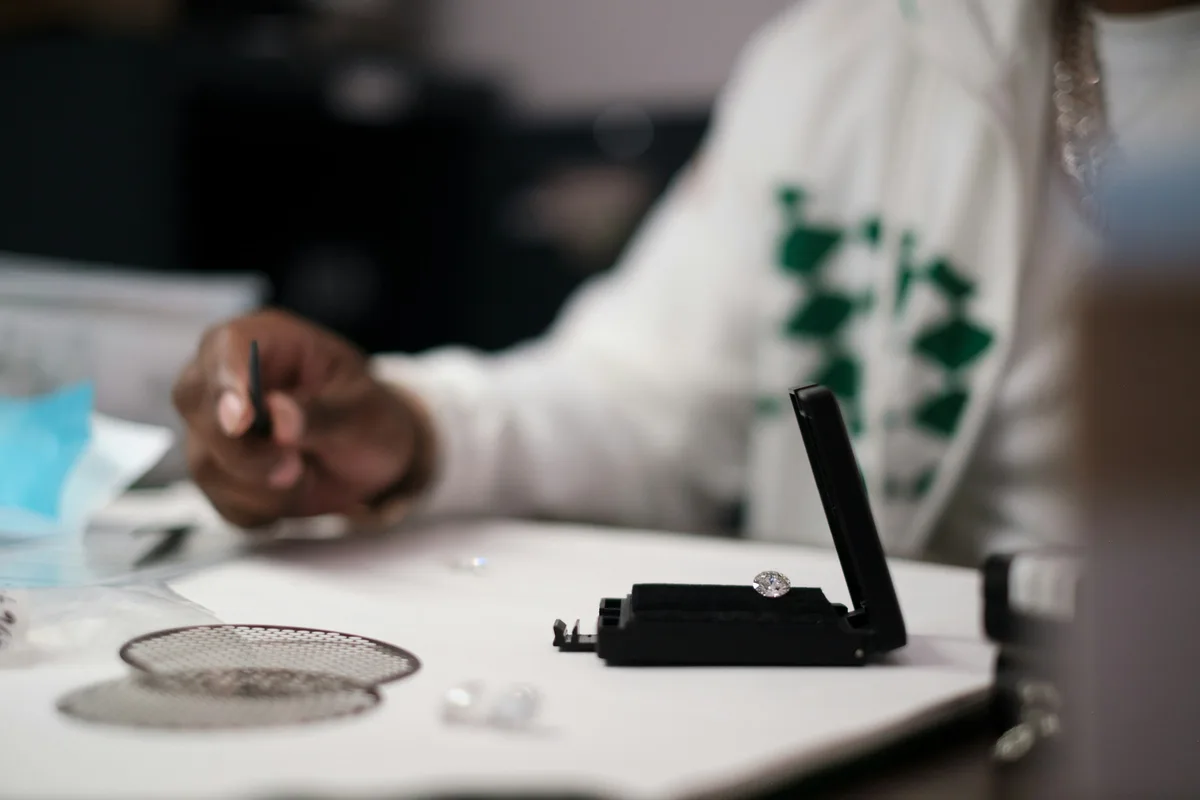
A stone can be worth more than the gold around it, especially a diamond. If one has fallen out of a broken setting, bring it in a small sealed bag along with the piece. We test diamonds free on-site with every appraisal, and we also buy loose diamonds and diamond jewelry.
Repair It, Borrow Against It, or Sell It
Broken does not have to mean sold.
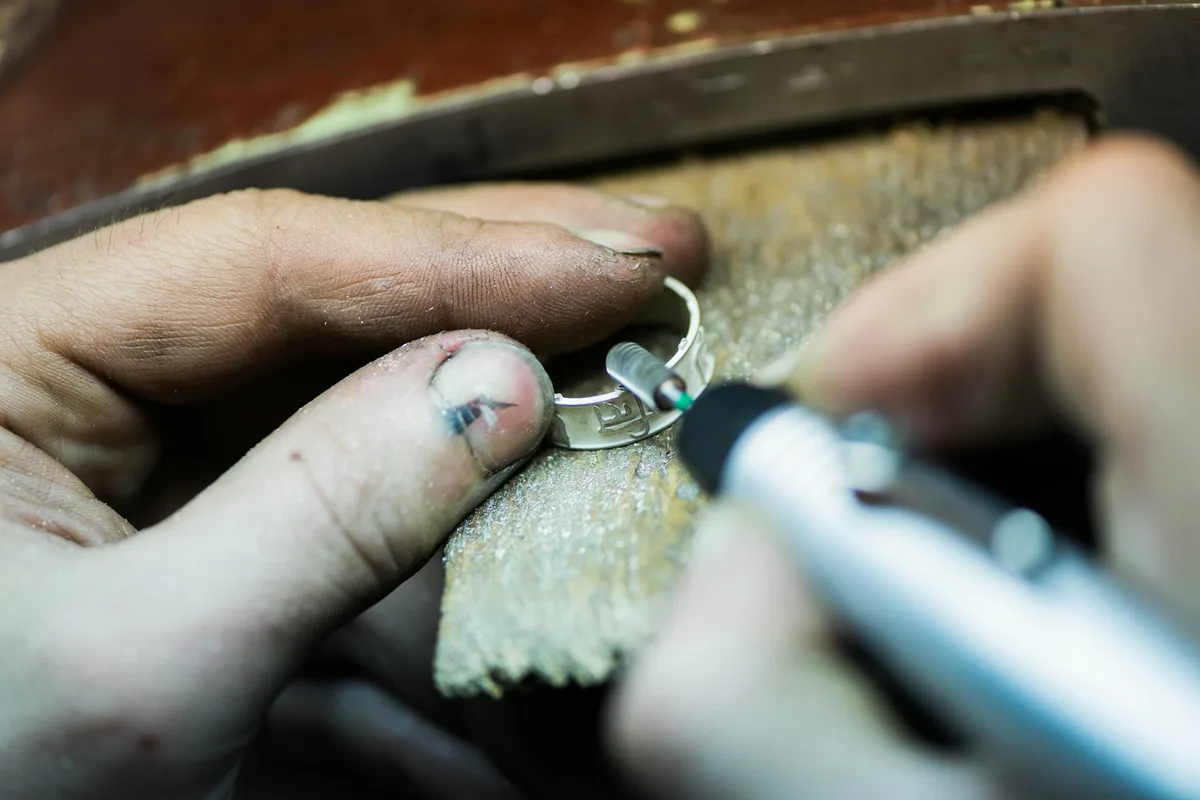
- Repair it if you want to wear it again. Broken chains and bracelets can be repaired and loose stones reset. Our jewelry repair service starts with a free assessment, and you are told what is needed before any work begins.
- Borrow against it if you need cash now but are not ready to let it go. Damaged and scrap gold is accepted as collateral for a gold loan, and you get the piece back by repaying the loan and its fees. A loan only makes sense if you expect to repay it.
- Sell it if you no longer want it. You get the offer up front with nothing to repay. Our guide to selling gold jewelry for cash in Brockton covers the steps.
Broken Sterling Silver
Broken silver works the same way: silver content, weight and the day’s silver price set the value, and a break changes none of them. Silver is worth far less per gram than gold, so keep the two in separate bags. Vermeil belongs in the silver bag.
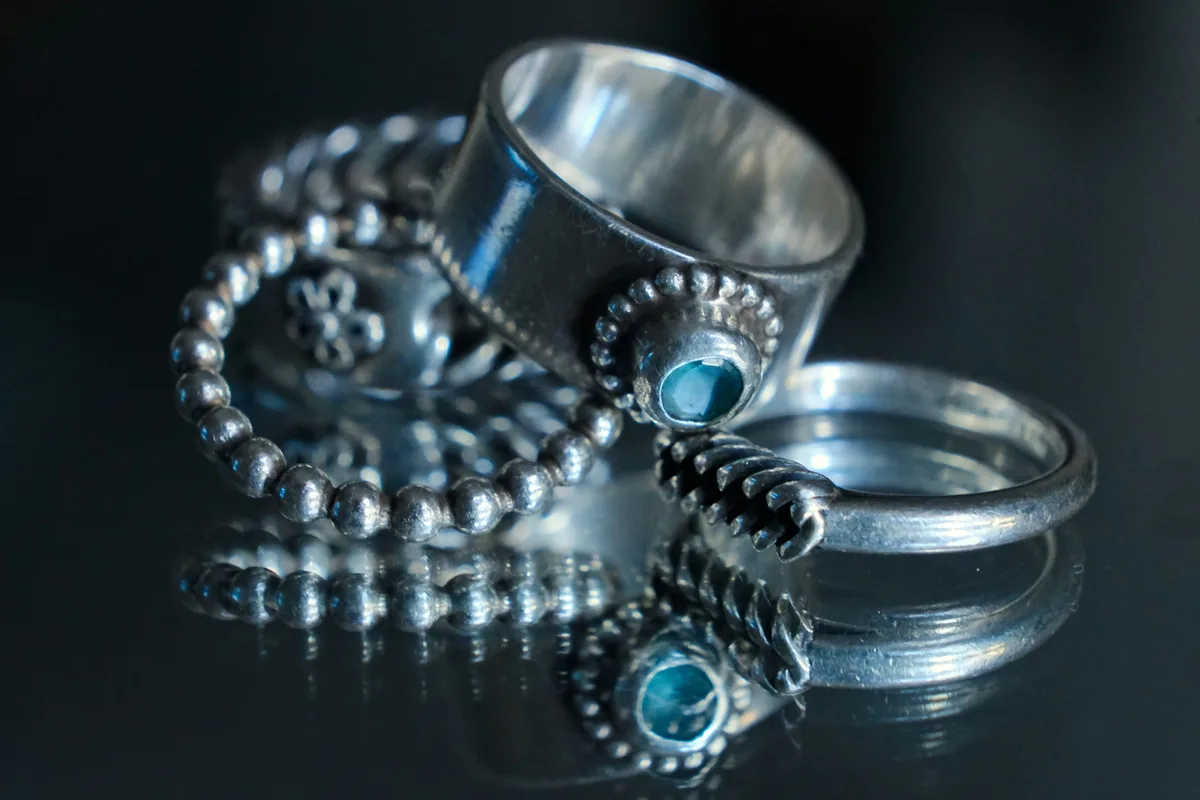
Under 16 CFR 23.5, “sterling” should only be used on silver that is at least 925/1,000ths pure, the figure behind the common 925 stamp. The same section quotes the National Stamping Act, which bars stamping silver-plated articles with the word “sterling.” A silver-colored piece with no mark may be plated or base metal, and our guide to telling sterling from silver plate walks through the checks.
We buy broken and scrap silver in any condition, tested on-site and priced against daily silver market rates.
Selling Broken Gold at Our Brockton Shop
If you are in or near Brockton, Ideal Jewelry and Loan has bought gold in downtown Brockton since 1955, and our shop is at 242 Main St. Here is what to expect when you bring in broken or scrap gold:
- We buy gold in 10kt, 14kt, 18kt, 19kt and 22kt, in any condition, including broken, scrap and unwanted pieces.
- Every item is tested on-site and priced against current daily gold market rates. The appraisal is free, with no obligation to sell.
- If you would rather keep the piece, broken and scrap jewelry is accepted as collateral for a jewelry loan, with no credit check. Bring a valid government-issued ID.
No appointment is needed. We are open Monday through Friday 9am to 5pm and Saturday 10am to 4pm. Call us at 1-508-583-8448 or send us a message if you have a question before you come in.
Frequently Asked Questions
Do pawn shops buy broken gold jewelry?
A break rarely matters to a gold buyer, since the gold is still there, but each shop sets its own policy, so call ahead if you are unsure. We buy gold in any condition, including broken, scrap and unwanted pieces.
Can you pawn a broken necklace?
A broken gold or silver necklace can be used as loan collateral, because the metal is still there. We accept broken and scrap jewelry in any condition for jewelry loans, with no credit check. You get the necklace back by repaying the loan and its fees.
Do pawn shops fix broken jewelry?
Some do and some do not, so ask. We offer jewelry repair, including chain and bracelet repair, stone resetting and ring resizing, and the assessment is free. If you plan to sell the piece for its gold, skip the repair.
What is the 14K scrap gold price per gram?
14K gold is 58.3% pure gold, so the melt value of one gram of 14K is 0.583 times the day’s price for one gram of pure gold. Gold prices move throughout the trading day, so use our calculator for a current figure. A buyer’s offer will be below the melt value to allow for refining.
Can I sell broken gold and silver at the same time?
Yes. Keep them in separate bags so each metal is weighed and priced at its own rate. We buy both, in any condition.