
Ads for mail-in gold buyers make selling sound effortless: request a kit, drop your old jewelry in the mail, and wait for a check. For some people that is exactly what they want. For others it turns into a lower offer than expected, a deadline they missed, or a piece of family jewelry they cannot get back.
Mail-in gold buying is a legitimate way to sell. The question is whether it suits what you are selling, and whether you understand the terms before your gold leaves your hands. This guide explains how it works, what to check first, and how it compares with selling in person.
How Mail-In Gold Buying Works
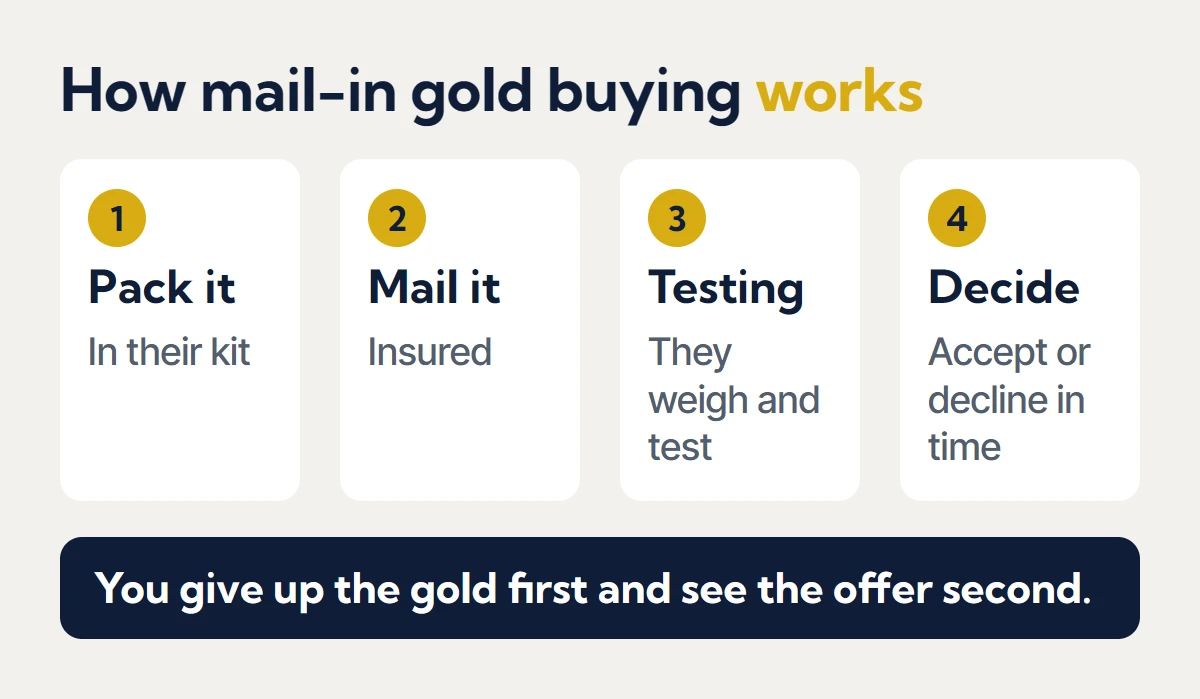
The details vary by company, but the process usually follows the same steps:
- You request a shipping kit or label and pack your jewelry, coins or scrap gold.
- You mail it, often in an insured package arranged by the buyer.
- The buyer receives it, weighs and tests it, and calculates an offer.
- You are sent the offer, sometimes as a check or payment that counts as acceptance if you cash it.
- If you decline within the allowed time, the items are returned, sometimes at your cost.
The key difference from selling in person is the order of events. With a mail-in buyer, you give up the gold first and see the offer second.
What to Check Before You Ship Anything
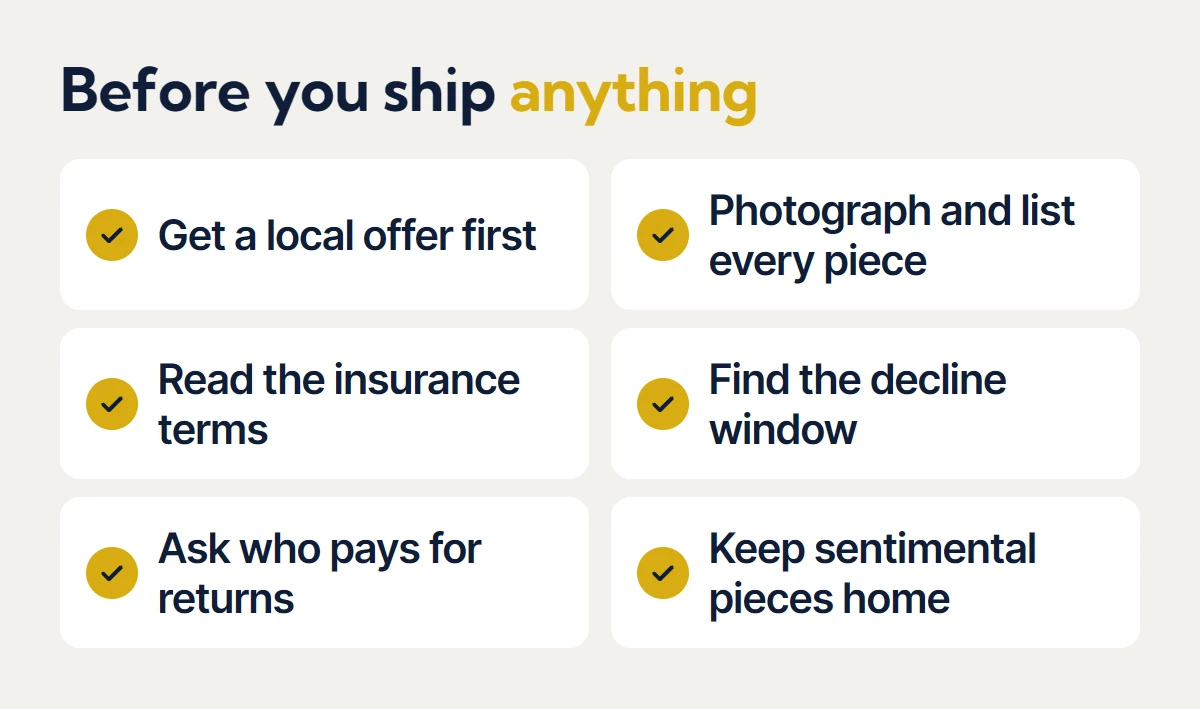
If you decide to sell by mail, these steps protect you.
- Get a local offer first. Even if you plan to mail your gold, an in-person quote gives you a number to compare against. Without one, you have no way to judge whether a mailed offer is fair.
- Photograph and list every piece. Take clear photos of each item, note any stamps such as 10K or 14K, and weigh the pieces if you have a kitchen or jewelry scale.
- Read the insurance terms. Find out who insures the package, up to what value, and how a claim works if it is lost.
- Find the decline window. Check how many days you have to reject an offer, how you have to reject it, and whether sending or cashing a payment means you accepted.
- Ask who pays for returns. Some buyers return declined items free; others deduct return shipping or charge a fee.
- Ask when items are processed. Once gold is melted down, there is nothing to return. Get in writing how long your items are held before processing.
- Research the company. Look for its registered business details, independent reviews and complaint history, not just the testimonials on its own site.
- Keep sentimental pieces at home. A ring with family history is not something to risk in an envelope for a few dollars more.
What Is Different About Selling in Person
Selling at a local gold buyer, jeweler or pawn shop turns the order of events around. You see the offer before you hand anything over.

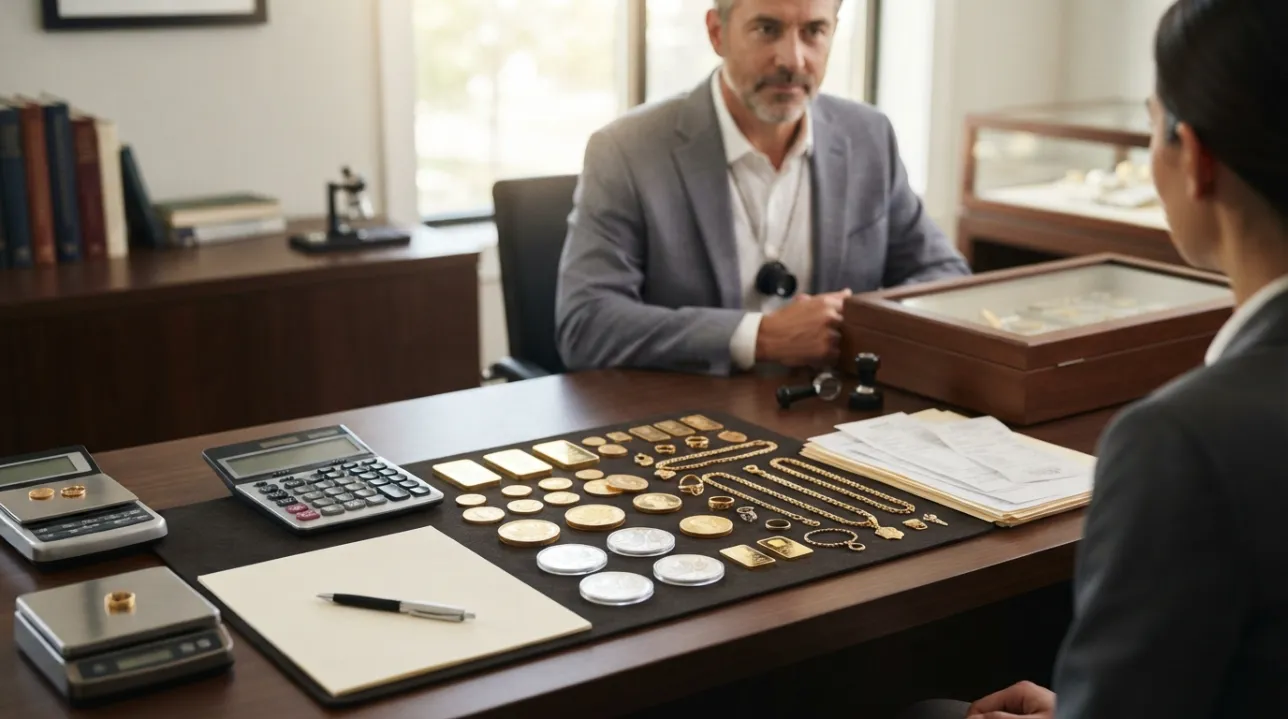
- You can watch your gold being weighed and tested.
- You can ask how the offer was calculated: the weight, the karat, and the gold price used.
- If the number does not work for you, you put the jewelry back in your pocket and leave.
- If you accept, you are usually paid the same day.
- Nothing is shipped, so there is no shipping risk or return window to track.
A local buyer also has a physical shop, a local reputation and, in many places, a license issued by the city or town. You can walk in, look around and ask questions before you decide.
| Mail-in buyer | Local buyer | |
|---|---|---|
| When you see the offer | After your gold arrives | Before you hand it over |
| Who sees the testing | Only the buyer | You can watch |
| If you say no | Items are mailed back, within the buyer’s terms | You leave with your jewelry |
| Shipping risk | Yes, covered by the insurance terms | None |
| When you are paid | Days to weeks | Usually the same day |
When Mail-In Can Make Sense
To be fair to mail-in buyers, there are situations where they are a reasonable choice:
- There is no gold buyer within a practical distance of where you live.
- You cannot easily travel to a shop.
- You are selling a small amount of broken or scrap gold with no sentimental value.
- You have read the terms, got a local quote to compare, and are comfortable with both.
If none of those apply, selling in person usually gives you more control for the same effort.
Red Flags in Any Gold Offer
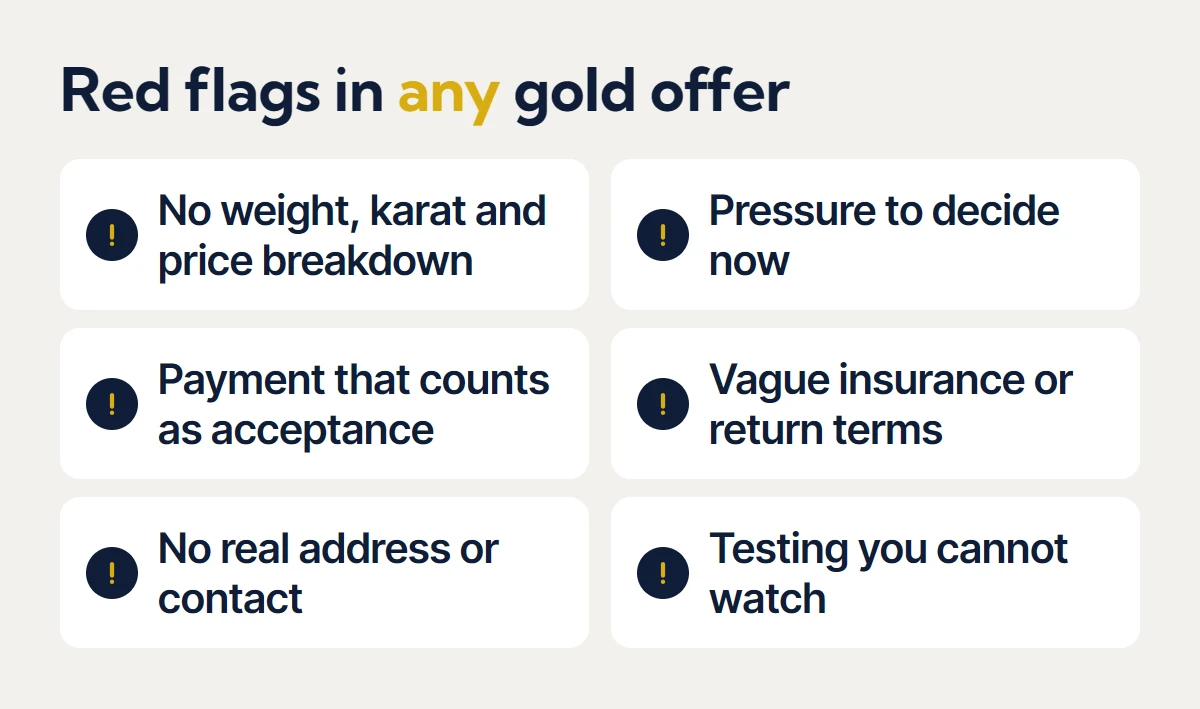
These warning signs apply to mail-in and local buyers alike:
- No breakdown. An offer that does not state the weight, the karat and the gold price behind it is impossible to check.
- Pressure to decide now. A fair offer is still fair tomorrow, give or take the day’s gold price. Being told an offer expires in minutes is a reason to slow down.
- Payment that counts as acceptance. A check that closes the sale the moment you cash it, sent before you agreed to the number, puts the decision on a deadline you did not choose.
- Vague insurance or return terms. If you cannot find out how much your package is insured for, or what happens if you decline, assume the answer does not favor you.
- No real address or contact. A buyer you cannot visit, call or look up is a buyer you cannot hold to its promises.
- Testing you are not allowed to see. In person, there is no reason a buyer cannot test your gold in front of you.
Getting the Best Offer Either Way
Whichever route you choose, the same preparation helps:
- Know what you have. Our guide to getting cash for gold walks through the basics, and the stamp tells you the karat.
- Sort by karat. Keep 10K, 14K and 18K pieces in separate bags so each is weighed and priced correctly.
- Do the rough math. Our gold price per gram calculator gives you a ballpark figure from the weight and karat. An offer will be below the raw gold value, because the metal still has to be refined.
- Remember that gold prices move daily. An offer from last month is not today’s offer.
- Get more than one offer. Comparing quotes is normal and expected.
- Keep coins separate from jewelry. Some coins are worth more than their gold or silver content to collectors, so they should be looked at on their own rather than weighed in a bag with scrap.
Selling Gold at Our Brockton Shop
Ideal Jewelry and Loan is a licensed precious metal buyer in the City of Brockton and has bought gold in downtown Brockton since 1955. Our shop is at 242 Main St. Here is how a visit works:
- We buy gold in every karat and in any condition, including broken, scrap and unwanted pieces.
- Every item is tested on-site and priced against the current daily gold rate, and you can watch it happen.
- The appraisal is free, with no obligation to accept the offer.
- If you accept, you walk out with cash. If you would rather keep the piece and borrow against it, ask us about a jewelry loan.
No appointment is needed. We are open Monday through Friday 9am to 5pm and Saturday 10am to 4pm. Call us at 1-508-583-8448 or send us a message with any questions before you come in.
Frequently Asked Questions
Is cash for gold by mail legit?
Mail-in gold buying is a legal business, and many buyers operate honestly. The risks are in the terms: what the offer is based on, how long you have to decline, who pays return shipping, and when your items are melted. Read them before you ship.
How long does a mail-in gold offer take?
It depends on the company and on shipping times. Expect at least several days from mailing to offer, and longer if you decline and need the items returned.
What happens if I do not like the offer?
With a mail-in buyer, you follow its decline process within its deadline, and the items are mailed back under its terms. With a local buyer, you simply take your jewelry home.
Is it safe to mail gold?
It can be, if the package is tracked and insured for its full value and you keep photos and a list of what you sent. The safest gold is gold that never leaves your hands until you have accepted an offer.
Do I need ID to sell gold?
Most licensed buyers ask for a valid photo ID when you sell, so bring one with you.