

A class ring can sit in a drawer for decades before anyone asks what it is worth. The answer surprises people in both directions. Some class rings contain a good amount of gold and are worth more than the owner expected. Others look like gold but are made from an alloy with little or no precious metal in it at all.
The good news is that you can find out which kind you have in a few minutes, before you take it anywhere. This guide covers how to read the ring, how a gold class ring is valued, and where to sell it.
Start With the Stamp Inside the Band
Most class rings are marked on the inside of the band. Look closely, with a magnifying glass if you have one, for a karat mark or a number. The mark often sits next to the maker’s name or logo and the year.
| Stamp | What it means | Precious metal content |
|---|---|---|
| 10K or 417 | 10 karat gold | 41.7% gold |
| 14K or 585 | 14 karat gold | 58.3% gold |
| 18K or 750 | 18 karat gold | 75% gold |
| A karat mark followed by GF or GP, such as 10K GF | Gold-filled or gold-plated | A gold layer over another metal, not solid gold |
| 925 or STER | Sterling silver | 92.5% silver |
| A brand alloy name, or no metal mark | Often a non-precious alloy | Little or none, have it tested |
The percentages come straight from the karat system: pure gold is 24 karat, so 10 karat is 10 parts in 24 and 14 karat is 14 parts in 24. A stamp is a strong clue, but a buyer will still test the metal, because stamps can wear away and occasionally are wrong.
Read the whole mark, not just the karat. Under the Federal Trade Commission’s jewelry guides, terms such as “gold filled” and “gold plate,” or their abbreviations, describe a layer of gold alloy over another metal, and the karat shown is the karat of that layer. So a ring stamped 10K GF is not a solid 10K gold ring. It holds far less gold than the number suggests, which matters most with older rings.
Not Every Class Ring Is Gold
This is the most important thing to know before you get your hopes up, or before you dismiss a ring as worthless. Ring makers have long offered lower-cost alloys alongside gold, and many of them look like white or yellow gold.
- Lustrium, offered by Jostens, is described in a university store’s Jostens ring FAQ as “a mixture of nickel and chromium.” It contains no gold.
- Siladium, from ArtCarved, is a trademark for a stainless steel alloy used in class rings. It contains no gold either.
- Solaris Elite, another Jostens option, sits in between. The same FAQ describes it as an alloy with “25% gold content,” which works out to 6 karat. It has some gold value, but far less than a 10K or 14K ring of the same weight.
So a ring that looks gold is not always gold, and a ring that looks silver may be white gold, sterling, or stainless steel. The stamp and a quick test settle it.
How a Gold Class Ring Is Valued
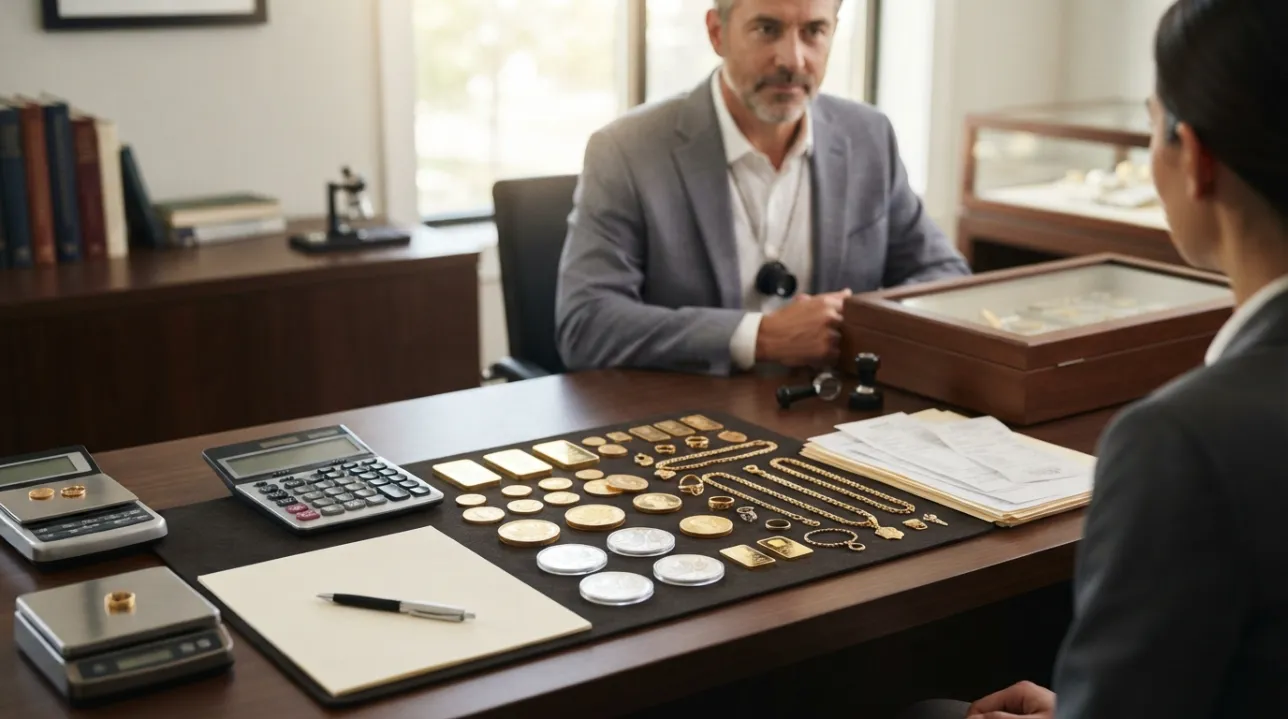
When a class ring is gold, a buyer values it mainly by its metal, in three steps:
- Weight. The ring is weighed in grams. If you have a kitchen or jewelry scale, you can weigh it at home first.
- Purity. The karat tells you how much of that weight is pure gold. A 10-gram 10K ring holds about 4.17 grams of pure gold, and a 10-gram 14K ring holds about 5.83 grams.
- The gold price that day. Gold is priced daily, so the same ring can be worth noticeably more or less from one month to the next.
You can put your own numbers into our gold price per gram calculator for a rough idea. Keep in mind that any buyer’s offer will be below the raw gold value, because the metal still has to be refined. For more detail on how karat affects the price, see our guides to 10K gold prices and 14K melt value.
What about the stone?
The center stone does not count toward the gold weight. When a ring is bought for its gold, the buyer either removes the stone or allows for its weight. Ask how the stone is treated when you get an offer, so you know what you are being paid for.
Does the School, Year or Brand Add Value?
Usually not much. Most class rings are bought for their metal, whatever the school or the year on the side. Occasionally a collector will pay more for a ring from a particular school, team or era, but that is the exception, and it takes time to find that buyer.
An engraved name or initials inside the band does not reduce the metal value. Wear, scratches or a missing stone do not change the gold content either.
Where to Sell a Class Ring
A local gold buyer or pawn shop is the most direct option. You can watch the ring being weighed and tested, ask how the offer was worked out, and be paid the same day. Getting more than one offer is reasonable.
A jeweler may also buy gold, though some only offer store credit or trade-in value.
Mail-in gold buyers send you a shipping kit and an offer after the ring arrives. You give up the ring before you see the final number, so read the terms on returns and declined offers carefully.
Collectors and online marketplaces are worth a look only if the ring has a reason to interest collectors. For most rings, the extra effort does not pay more than the metal value.
Keep It, Pawn It or Sell It
A class ring carries memories, and there is no rush to decide. If you need money now but are not sure you want to part with it, a pawn loan lets you borrow against the ring and get it back by repaying the loan and fees within the term. If you are sure, selling gives you the full purchase offer up front. Our guide to pawning versus selling jewelry compares the two.
Selling a Class Ring at Our Brockton Shop
Ideal Jewelry and Loan has bought gold in downtown Brockton since 1955, and our shop is at 242 Main St. Here is what to expect if you bring in a class ring:
- We buy gold in every karat and in any condition, including rings with worn engraving or a missing stone.
- Every item is tested on-site and priced against the current daily gold rate, and the appraisal is free with no obligation to sell.
- If you would rather keep the option of getting the ring back, we can explain a jewelry loan instead, with no credit check.
No appointment is needed. We are open Monday through Friday 9am to 5pm and Saturday 10am to 4pm. Call us at 1-508-583-8448 or send us a message if you have a question before you come in.
Frequently Asked Questions
Are class rings real gold?
Many are 10K or 14K gold, but many are not. Class rings have also been made in sterling silver, in gold-filled or plated metal, and in non-precious alloys such as Lustrium and Siladium. Check the whole stamp inside the band, and have the metal tested if there is no clear karat mark.
How much is a 10K class ring worth?
It depends on its weight and the gold price that day. A 10K ring is 41.7% gold, so multiply the weight in grams by 0.417 to find the pure gold content, then by the day’s gold price per gram. A buyer’s offer will be below that figure to cover refining.
Is my Jostens ring worth anything?
It depends on the metal. Jostens has made rings in 10K and 14K gold, which carry real gold value, and in alloys such as Lustrium, which contains no gold, and Solaris Elite, which is 25% gold. The stamp inside the band usually tells you which one you have.
Does the stone in a class ring add value?
Usually not much when the ring is sold for its gold. The stone is not counted in the gold weight, so ask the buyer how they handle it.
Can I pawn a class ring?
A gold or silver class ring can usually be pawned, because the loan is based on the value of its metal. A ring made from a non-precious alloy has little loan value.