Most people cannot tell sterling silver from silver plate just by looking at it, and that is a completely normal gap in knowledge. The difference is not about shine or color. It comes down to a tiny stamp most people never think to look for.
Key Takeaways
- Sterling silver is 92.5 percent pure silver, marked as “925” or “Sterling,” a standard enforced under United States federal trade law.
- Silver plated items carry only a thin silver layer over a base metal such as brass, copper, or nickel, often marked “EPNS,” “EP,” or “A1.”
- Weight is a strong clue. A sterling silver fork typically weighs far more than a silver plated version of the same size.
- Ideal Jewelry & Loan tests silver on the spot to confirm purity before making an offer.
Start With the Stamp
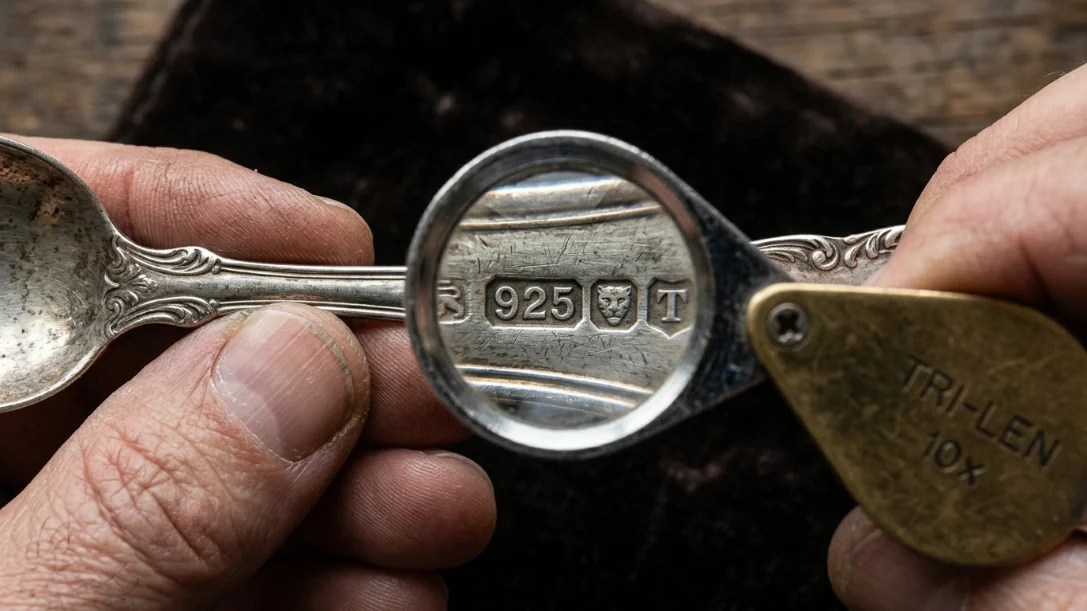
The fastest way to tell sterling from plate is to find the hallmark. In the United States, genuine sterling silver is marked “Sterling” or “925,” and under federal trade rules those words are only allowed on solid silver, not on plated goods. If you see “925” alone with no other markings, that is a strong sign of the real thing.
Silver plated pieces use different codes entirely. Look for “EPNS” (electroplated nickel silver), “EP” (electroplate), or “A1.” These marks are often stamped inside small decorative shields designed to resemble genuine hallmarks, which is exactly why so many people mistake plated pieces for solid silver at a glance.
One mark that trips people up is “IS,” commonly seen on American flatware from the International Silver Company. IS is a maker’s mark, not a purity guarantee, and it appears on both sterling and plated product lines. Never treat IS by itself as proof of sterling. Always look for “925” or “Sterling” alongside it.
Weight and Simple At Home Checks
Sterling silver is noticeably heavier than plated pieces of the same size, since the entire item is made from a silver alloy rather than a thin coating over a lighter base metal. If you have two similar pieces to compare, weight alone often gives away which one is solid.
A magnet test can also help rule things out. Silver is not magnetic, so if a strong magnet grips your item firmly, you are looking at a plated or non-silver piece, not solid sterling. This test will not confirm sterling silver on its own, but it is a quick way to eliminate obvious plated items before a professional appraisal.
Why This Matters Before You Sell
Sterling and plated silver are valued completely differently. Sterling silver has real melt value tied to current silver prices, while plated silver is valued mainly for pattern, brand, and collectibility rather than metal content. Knowing which one you have before you visit a buyer sets realistic expectations and helps the conversation move faster once you are at the counter.
How Ideal Jewelry & Loan Confirms Purity
Reading a hallmark is a good starting point, but stamps can be worn, faked, or missing entirely on older pieces. Ideal Jewelry & Loan tests silver items on the spot using standard purity testing methods, so you get a confirmed answer rather than a guess, along with a fair cash offer based on current market pricing.
Frequently Asked Questions
What does a 925 stamp actually mean? A 925 stamp means the item is 92.5 percent pure silver by weight, with the remaining 7.5 percent typically made up of copper for added strength and durability.
Can silver plated items still be worth selling? Yes, though usually for different reasons. Plated pieces are valued for maker, pattern rarity, and condition rather than melt value, so a well known brand or discontinued pattern can still bring a fair price.
Is it safe to clean silver before selling it? Light cleaning with a soft cloth is generally fine, but avoid abrasive polish that could remove a worn hallmark or thin the plating on plated pieces, since that mark is often needed to confirm what you have.
Do you test silver for free? Yes. Ideal Jewelry & Loan provides a free, no obligation purity test and appraisal for all silver items.
Call us at 1-508-583-8448 or visit us at 242 Main St., Brockton, MA 02301.
Follow Ideal Jewelry and Loan on Facebook.