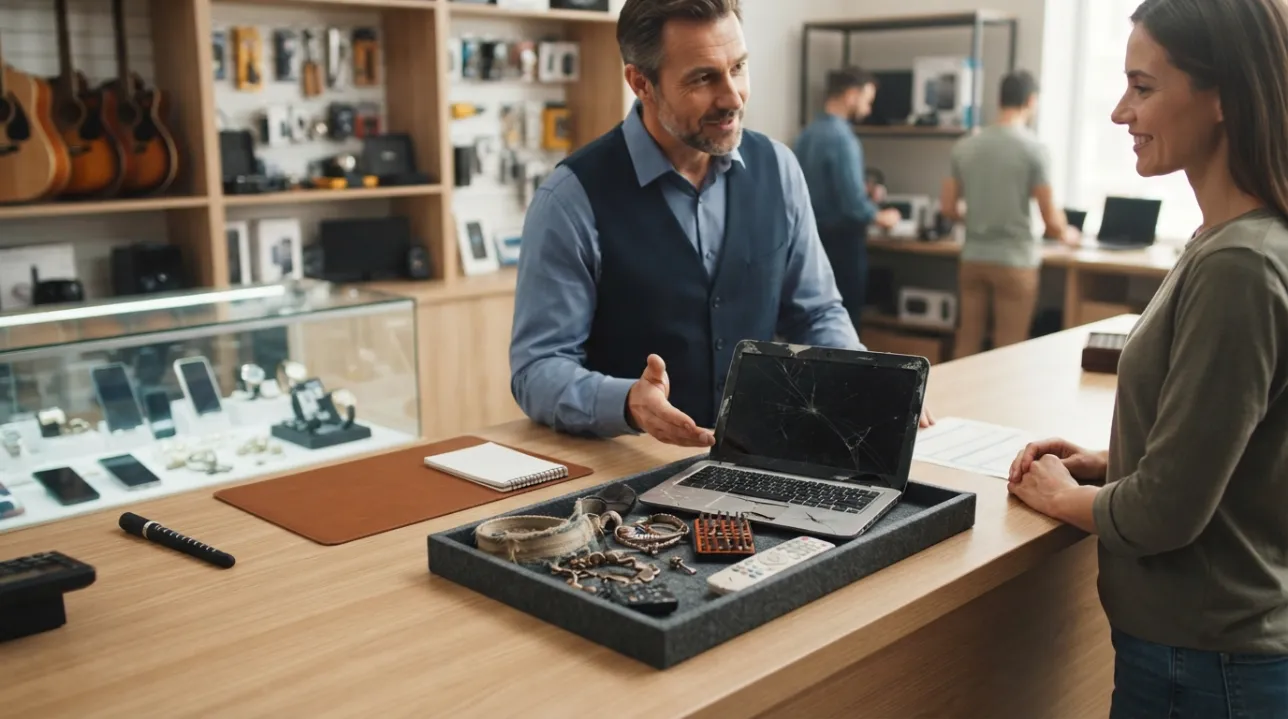

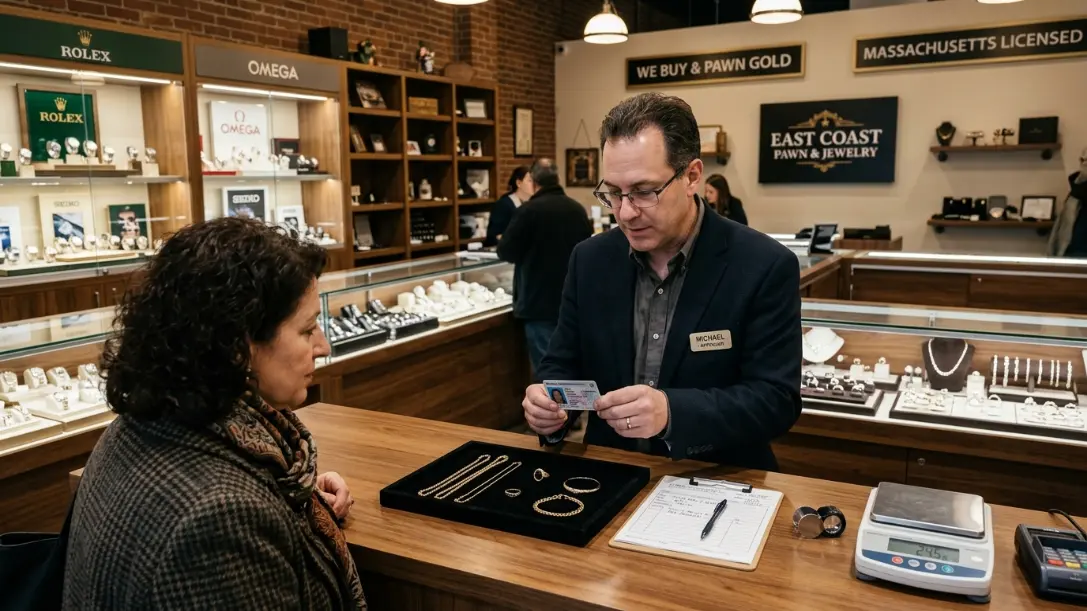
Handing over a family ring or a box of old coins to a stranger behind a counter can feel uncomfortable the first time. That discomfort usually comes from not knowing the rules. Massachusetts pawnbrokers operate under specific state law, and understanding those rules turns an unfamiliar process into a straightforward one.
Key Takeaways
- Massachusetts pawnbroker licensing is governed by Massachusetts General Laws Chapter 140, Sections 70 to 85, with cities and towns approving local rules.
- The Massachusetts Division of Banks has not approved pawnbroker interest rates above 36 percent for loan amounts greater than 25 dollars.
- A licensed shop must verify your identity, document the transaction, and hold purchased items before resale.
- Ideal Jewelry & Loan has operated under these rules in Brockton since 1955.
Why Massachusetts Regulates Pawnbrokers So Closely
Pawnbroking is one of the most regulated retail categories in the state. Massachusetts General Laws Chapter 140 hands licensing authority to individual cities and towns, and any local interest rate rule still needs sign off from the Division of Banks before it becomes enforceable. This layered approval process exists to protect both the customer and the community.
The state also caps how much interest a pawnbroker can charge. The Division of Banks has not approved any rate above 36 percent annually for loan amounts over 25 dollars. That cap means a legitimate Massachusetts pawnbroker cannot simply set whatever rate it wants. If a shop quotes you something outside that range, that is a warning sign worth walking away from.
What a Licensed Shop Is Required to Do
A properly licensed pawnbroker in Massachusetts follows a consistent process for every transaction, not just for large or unusual items.
Identity verification. You will be asked for a valid, government issued photo ID before any pawn or sale is completed. This step protects you as much as it protects the shop, since it creates a clear record tying the transaction to you personally.
Written documentation. Every transaction results in a signed ticket or receipt. This document lists the item, the amount advanced, and the terms of the loan or sale. Keep this ticket. It is your proof of the agreement and the fastest way to resolve any question later.
Holding periods before resale. Purchased items are not placed back on the shelf immediately. State and local rules require a holding period before resale, which gives law enforcement a window to check purchased goods against stolen property reports and gives you time to change your mind on certain transactions.
How to Spot a Shop That Is Cutting Corners
A shop that skips ID verification, avoids giving you a written ticket, or pressures you to accept an offer on the spot without explanation is not following standard practice. Reputable pawnbrokers welcome questions about how an offer was calculated and are transparent about loan terms, interest, and what happens if a loan is not repaid.
Ideal Jewelry & Loan has served Brockton since 1955, and that longevity is not an accident. A pawnbroker only survives seven decades in the same community by treating documentation, fair pricing, and transparency as standard practice rather than an inconvenience.
The Bottom Line for First Time Sellers
Selling or pawning an item in Massachusetts is a regulated, documented process designed to protect you. A valid ID, a written ticket, and a clear explanation of your offer are not extra courtesies. They are the baseline of a legitimate transaction. If a shop cannot offer all three without hesitation, that shop is not the right place for your valuables.
Frequently Asked Questions
Do I need an appointment to sell or pawn an item? No. Most licensed pawnbrokers, including Ideal Jewelry & Loan, accept walk ins for appraisals and offer same day cash with no appointment required.
Will selling or pawning affect my credit score? No. Pawn transactions are not reported to credit bureaus and do not require a credit check, since the loan is secured by the item itself rather than your credit history.
What happens if I cannot repay a pawn loan on time? You are not penalized beyond losing the item. If a loan is not repaid within the required period, the item becomes available for resale, with no collection calls and no credit impact.
Can I ask how my offer was calculated? Yes. A transparent pawnbroker will walk you through how weight, purity, condition, and current market value shaped your offer.
Call us at 1-508-583-8448 or visit us at 242 Main St., Brockton, MA 02301.
Follow Ideal Jewelry and Loan on Facebook.