
By the Ideal Jewelry & Loan team | Last reviewed November 26, 2026
How to tell if a diamond is real comes down to one fact: a trained gemologist gives the most reliable answer. Home tricks can raise a red flag. However, the Gemological Institute of America (GIA) warns that several popular home tests are unreliable, and one of them can scratch your setting.
This guide shows which home checks are worth a try and which ones to skip. It also explains how jewelers confirm a stone and what to do before you sell or pawn a diamond in Brockton, MA.
Key Takeaways
- To know how to tell if a diamond is real, remember that a trained gemologist or a gem lab gives the most reliable answer.
- Popular home tests, such as the fog test and the newspaper test, often give wrong answers.
- Moissanite can pass a basic heat test, so one “real” reading is not final proof.
- A lab-grown diamond has the same composition as a mined one, and only lab equipment can tell them apart.
What Does “Real Diamond” Mean?
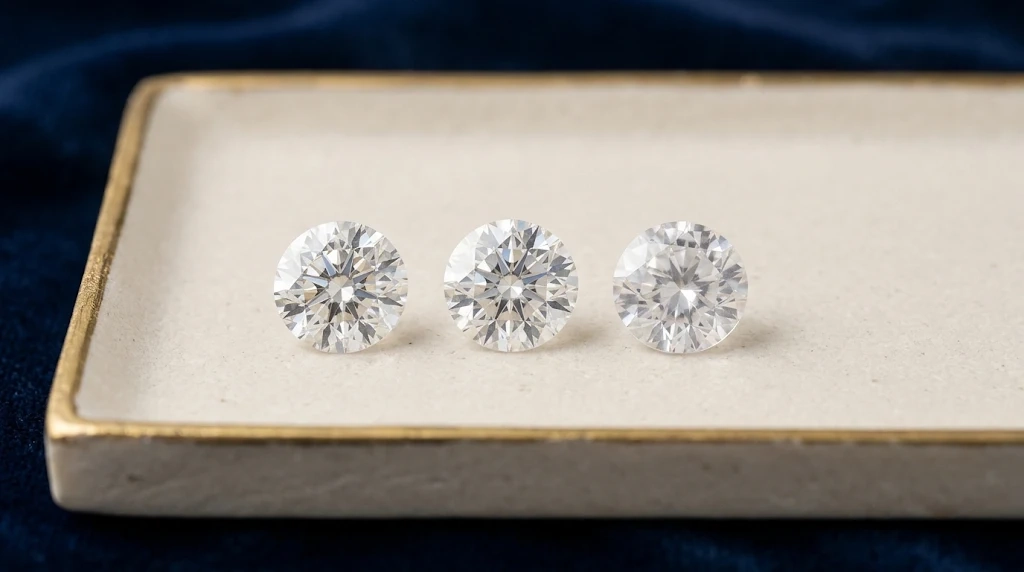
A real diamond is a stone made of carbon with a diamond crystal structure. It can be natural or lab-grown. Anything else is an imitation, also called a simulant.
GIA explains that lab-grown diamonds have the same chemical composition, crystal structure, and physical properties as mined ones, so they are diamonds, not imitations. Common imitations include cubic zirconia, moissanite, and glass. Colorless gems, such as white sapphire, topaz, and zircon, can also pass for diamonds at a glance. With those terms clear, you can start to learn how to tell if a diamond is real.
How to Tell If a Diamond Is Real at Home: Which Tests Help?
No home test can prove a diamond is real. At best, a test helps you spot an obvious fake before you spend money. Here is how the most popular tests hold up.
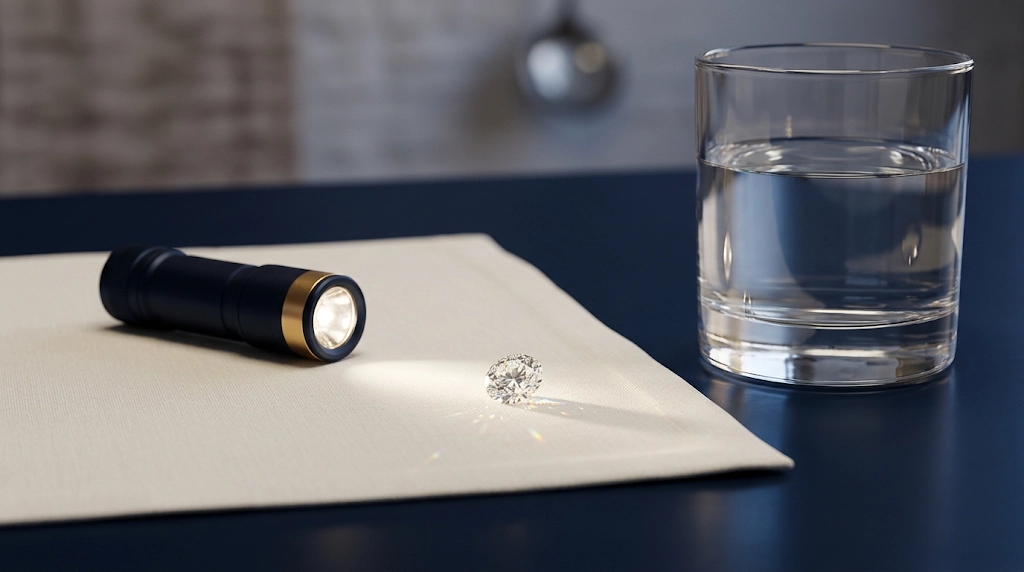
Can You Tell If a Diamond Is Real With a Flashlight?
A flashlight shows how a stone handles light. Some imitations give themselves away this way. Moissanite, for example, throws off much stronger rainbow flashes than a diamond does.
Still, the flashlight test is a clue, not proof. GIA points out that almost any faceted gem can look sparkly to an untrained eye, while a poorly cut diamond may look dull.
Does the Fog Test Tell If a Diamond Is Real?
The idea is simple. You breathe on the stone, and a real diamond is said to clear fast. GIA says the test cannot be repeated with consistent results, and humidity can change what you see. Real and lab-grown diamonds also react the same way.
Can Water Tell If a Diamond Is Real?
A loose diamond sinks in water. However, most other loose stones sink too, so the test proves very little.
Is the Newspaper Test Reliable?
In this test, you set the stone on a printed page and try to read the print through it. GIA says lighting, cleanliness, placement, the stone’s cut and mounting, and the viewer’s eyesight all change the result. As a result, the test can mislead you and cannot give a final answer.
Should You Scratch a Stone to Test It?
No. GIA calls the sandpaper test destructive. It can scratch the metal setting and ruin softer imitations, and it proves nothing, because moissanite can resist sandpaper too.
Looking for flaws under a loupe fails as well. Imitations can have flaws, and some real diamonds have none. Here is a quick summary of how these tests compare.
| Home test | How reliable is it? | Main problem |
|---|---|---|
| Flashlight or sparkle | Low | Many fakes sparkle, and some real stones look dull |
| Fog test | Low | Results cannot be repeated, and humidity changes them |
| Water test | Low | Most loose stones sink |
| Newspaper test | Low | Light, shape, and skill change the result |
| Loupe check for flaws | Low | Fakes can have flaws, and some real diamonds have none |
| Sandpaper or scratch test | Do not use | It can scratch the setting and ruin softer stones, and it proves nothing |
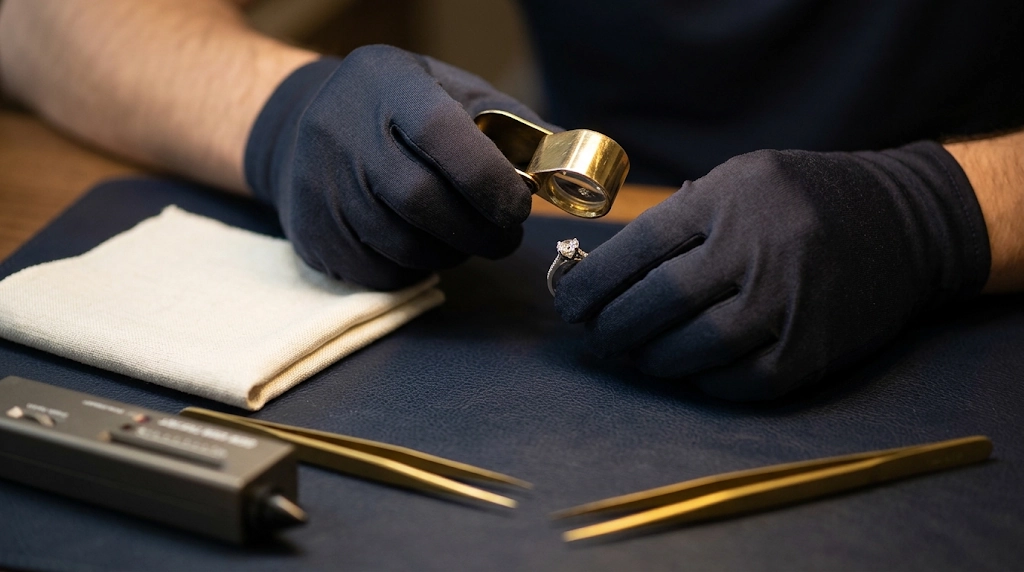
How Do Jewelers Tell If a Diamond Is Real?
Jewelers combine several tools with years of training. No single reading decides the answer. Here is what they typically check.
- Magnification. A trained eye studies the inside of the stone and the edges where facets meet. In moissanite, the back facets can look doubled because the stone splits light in two. A diamond does not do this.
- Heat testers. A common diamond tester measures how well a stone conducts heat. Moissanite comes close to diamond on this trait, so some testers read it as a diamond. Jewelers therefore add other checks.
- Lab reports. For a firm answer on a valuable stone, a GIA grading report confirms it is a diamond and describes its quality.
At Ideal Jewelry & Loan, our diamond experts evaluate every diamond on the 4Cs: color, cut, clarity, and carat. We also explain what we find in plain words.
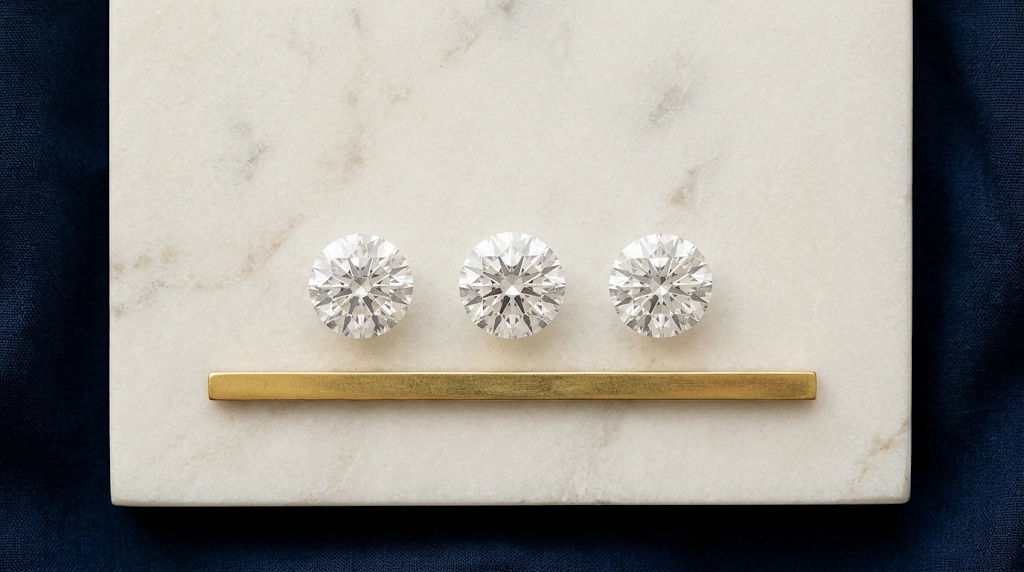
Real Diamond, Lab-Grown Diamond, or Imitation: How Do They Compare?
Only natural and lab-grown stones are diamonds. Everything else is an imitation.
| Stone | Is it a diamond? | What usually gives it away |
|---|---|---|
| Natural diamond | Yes | Confirmed by a trained gemologist or a lab report |
| Lab-grown diamond | Yes | Only advanced lab testing can tell it from a mined diamond |
| Moissanite | No | Stronger rainbow flashes and doubled back facets |
| Cubic zirconia | No | Often looks flawless and colorless, but a jeweler can separate it quickly |
| White sapphire, topaz, or zircon | No | Natural gems that look similar, so a trained eye is needed |
Moissanite is the imitation most likely to fool a basic heat tester. GIA lab notes say it shares some traits with diamond, such as hardness and thermal conductivity. They also say it differs in dispersion, which gives it more obvious fire, and in double refraction.
How to Tell If a Diamond Is Real Before You Sell or Pawn It
Gather your paperwork, leave the stone as it is, and bring it to a jeweler or buyer for testing. These steps help.
- Find your papers. A receipt, grading report, or appraisal shows a buyer what the stone is. GIA says you can look up a GIA report number online with its Report Check tool.
- Skip the do-it-yourself tests. Scratching or prying can damage the setting and lower the value of the piece.
- Bring the whole piece. Pricing reflects both the diamond and its gold or silver setting. Want a ballpark for the metal? Try our gold price per gram calculator first.
- Ask questions. A good buyer explains what they see and how they reached an offer.
No appointment is needed at our Brockton shop, and the evaluation is free. You can sell or pawn a diamond in Brockton and we will walk you through both options. For a closer look at the process, read about selling and pawning diamonds in Brockton. Once a stone checks out, its value depends on the 4Cs. Our guide to what affects a diamond’s value explains how. Still weighing the risks? See whether it is safe to pawn jewelry in Brockton.
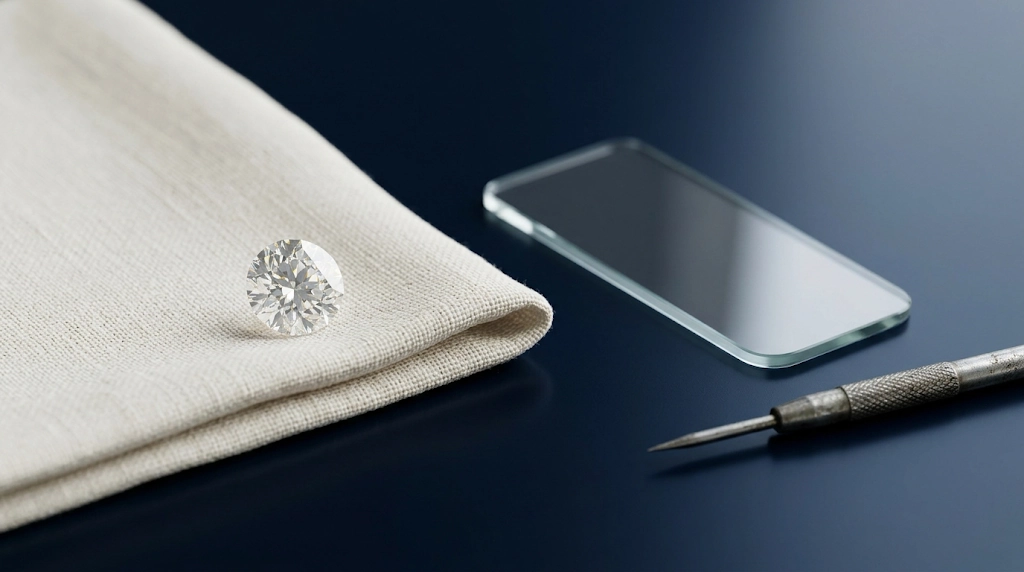
Common Mistakes When You Test a Diamond
Most people go wrong when they learn how to tell if a diamond is real from one quick online trick.
- Trusting one test. Use several clues, then get an expert opinion.
- Using a scratch or sandpaper test. It can scratch the setting and ruin softer stones, and it proves nothing.
- Trusting a heat tester alone. Moissanite can fool basic testers.
- Buying without a report. Ask for a grading report and verify it before you pay.
- Removing the stone yourself. Let a jeweler handle the setting.

Frequently Asked Questions
Is a lab-grown diamond a real diamond?
Yes. GIA says lab-grown diamonds have the same chemical composition, crystal structure, and physical properties as natural ones. They are not imitations. Telling them apart takes advanced lab equipment, so ask for a report if the difference matters to you.
Can you test a diamond that is still in a ring?
Often, yes. A jeweler can examine a mounted stone and run several checks on it. Some tests and full grading are easier with the stone out of the setting, so a jeweler may suggest removing it.
Does a GIA report prove my diamond is real?
A GIA grading report confirms the stone is a diamond and records its 4Cs. You can verify a report number through GIA Report Check.
Do I need papers to get a diamond looked at in Brockton?
Papers help, so bring any you have. If you have none, bring the diamond anyway. We evaluate each diamond on the 4Cs and explain what we find.
Want a Second Opinion on Your Diamond?
Not sure how to tell if a diamond is real? Bring your diamond to Ideal Jewelry & Loan, your Brockton, MA pawn shop and gold buyer, at 242 Main St., Brockton, MA 02301 for a free evaluation. No appointment is needed. We are open Monday to Friday, 9 am to 5 pm, and Saturday, 10 am to 4 pm. You can also call 1-508-583-8448.
We also serve customers from nearby Stoughton, Randolph, Easton, and Bridgewater.
Sources
- GIA. “How to Tell if a Diamond Is Real.” GIA 4Cs. Accessed November 26, 2026.
- GIA. “Synthetic Moissanite with Fraudulent GIA Inscription.” Gems & Gemology, Lab Notes, Fall 2020. Accessed November 26, 2026.