
Pawn Shop Layaway: How to Buy Jewelry on a Payment Plan
Layaway lets you reserve an item with a deposit and pay it off in installments, taking it home once the balance is cleared. Unlike financing, there is no credit check and no interest accruing on a balance, because you are not borrowing anything. You are paying toward something the shop holds for you.
Key Takeaways
- Layaway is a payment plan, not a loan, so there is no credit check and no debt.
- You take the item home after the final payment, not at the start.
- Ask about the deposit, payment schedule, fees, and cancellation policy before committing.
- Not every pawn shop offers layaway, and terms vary widely between those that do.
How Does Pawn Shop Layaway Work?
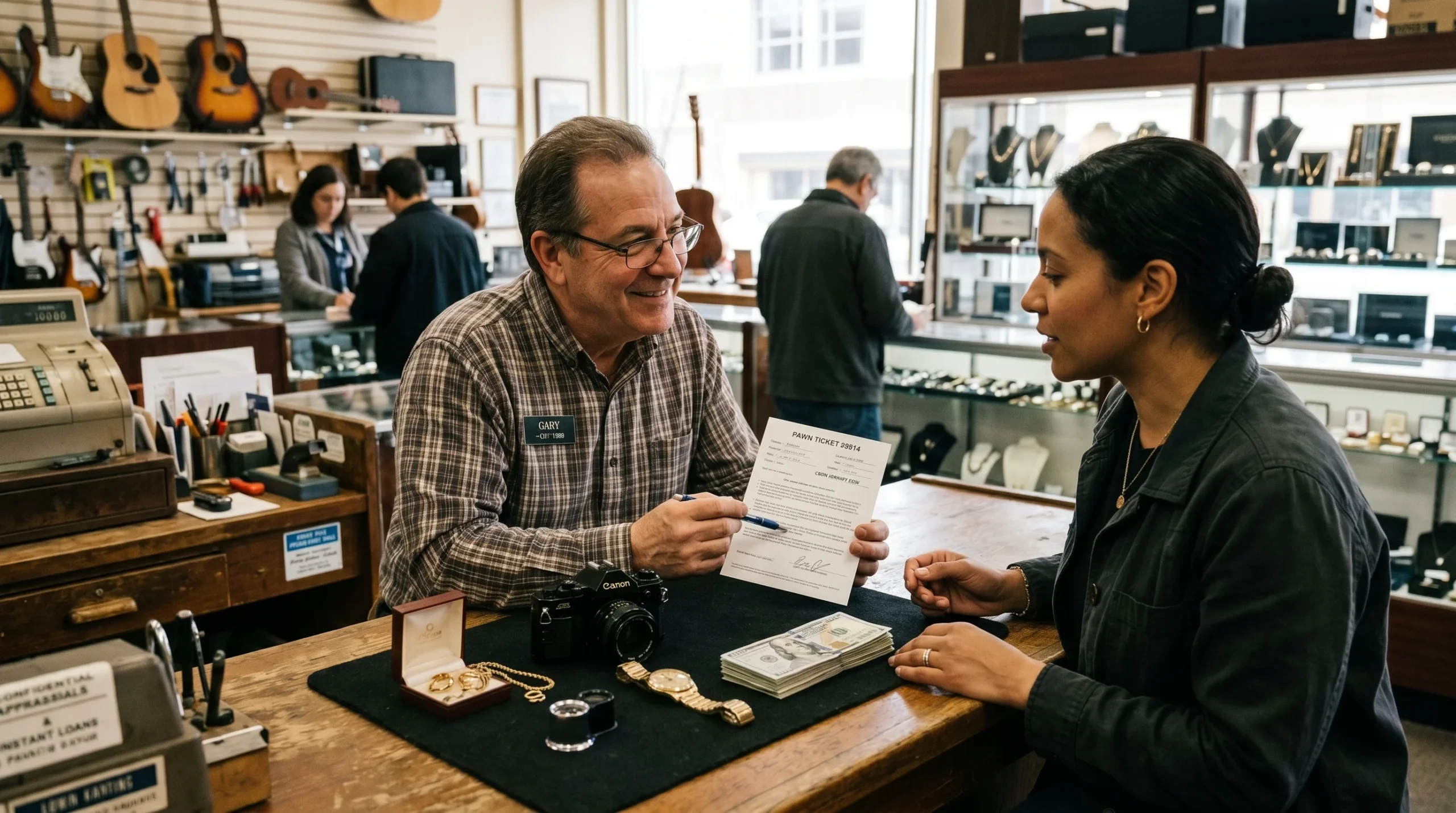
You choose an item, pay a deposit, and the shop sets it aside for you. You then make payments on an agreed schedule until the balance is paid, at which point you collect the item.
The critical difference from financing is timing. With a credit card or a store financing plan, you take the item home immediately and owe money afterward. With layaway, the shop keeps the item until you have paid in full. That is why no credit check is needed: the shop is never exposed to risk, because it still holds the merchandise.
Typical structures include an initial deposit of a set percentage, a fixed number of weekly or biweekly payments, and a completion deadline. Some shops charge a small service fee for setting up the plan. None of this is standardized across the industry, which is why asking upfront matters.
Layaway vs. Credit Card vs. Financing
| Feature | Layaway | Credit card | Store financing |
|---|---|---|---|
| Credit check | No | Yes | Usually |
| Interest charged | No | Yes, if balance carries | Varies, sometimes 0% promotional |
| When you get the item | After final payment | Immediately | Immediately |
| Risk if you stop paying | Lose deposit or pay a fee, per shop policy | Debt, interest, credit damage | Debt, possible collections |
| Builds credit | No | Yes | Usually |
Layaway’s advantage is that it cannot create debt. Its disadvantage is that you wait. If you need a ring for an engagement next month, a layaway plan running three months does not solve your problem.
What to Ask Before Starting a Layaway Plan
What is the deposit? Usually a percentage of the total price, often non-refundable in whole or in part.
What is the payment schedule and final deadline? Know the exact dates and the amount due each time.
Are there fees? Some shops charge a setup or service fee. Ask whether it is included in the total or added on top.
What happens if I miss a payment? Policies vary from a grace period to cancellation. This is the single most important question.
What happens if I cancel? Ask specifically whether you receive a refund, a store credit, or nothing, and get the answer in writing.
Is the price locked? Confirm the total will not change during the plan, particularly relevant for gold jewelry where metal prices move.
Will the exact item be held for me? You want your specific piece set aside, not a promise of something similar.
Get the terms in writing. A layaway agreement should be as documented as any other transaction, listing the item, the total price, the payment schedule, and the cancellation policy.
Why Layaway Suits Jewelry Purchases
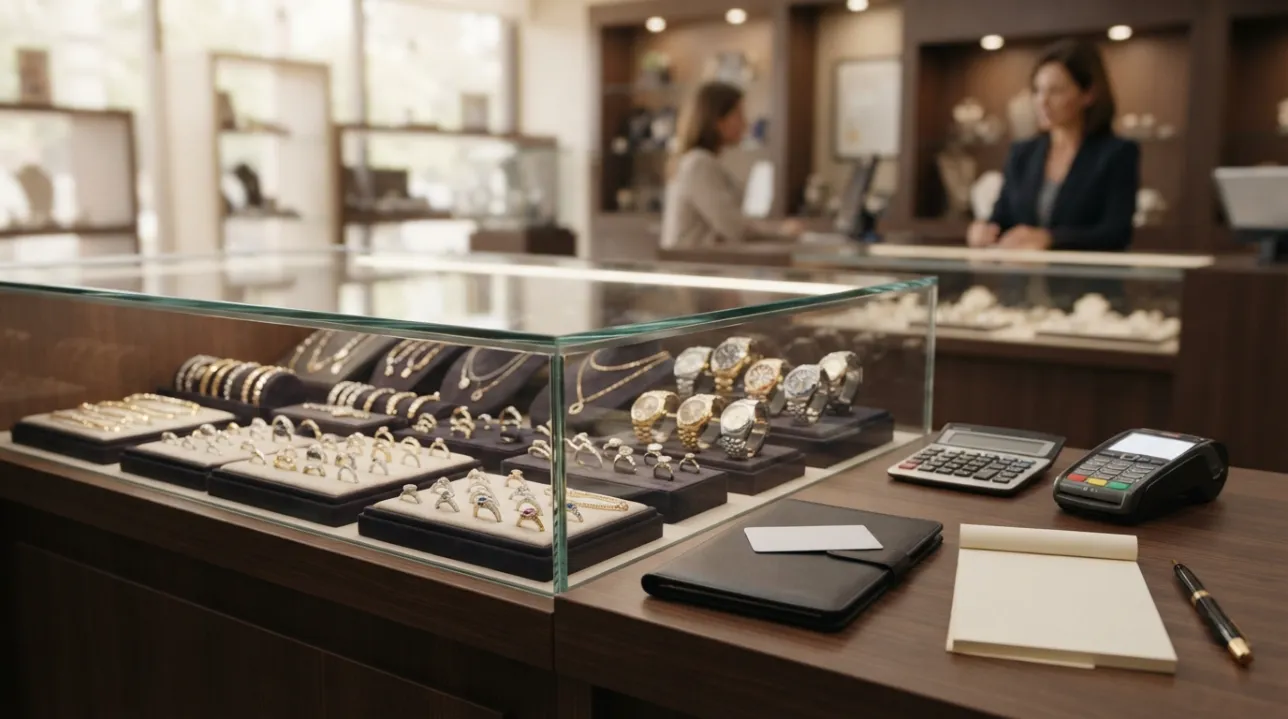
Jewelry is a category where layaway makes particular sense. Purchases are often tied to a date you know in advance, like an anniversary or a holiday, so you can work backward and start early.
Prices are also high enough that spreading payments matters, but items are small enough that holding them costs the shop very little, which is why shops are often willing to offer it on jewelry when they would not on bulkier goods.
Buying jewelry from a pawn shop in the first place tends to cost less than buying new retail, since pre-owned pieces do not carry the same markup. Our guides on buying jewelry from pawn shops and finding an engagement ring in Brockton cover what to inspect before you commit.
Planning Backward From a Deadline
Layaway rewards planning. If you know the date you need the item, count backward from it and add a buffer, because the shop releases the piece on final payment, not on your deadline.
A worked example: for an anniversary in twelve weeks on a $900 ring, a plan with a 20% deposit leaves $720 across roughly eleven weeks, or about $65 per week. Starting four weeks later compresses the same balance into $90 per week, which is when plans tend to fail. The earlier you start, the smaller each payment and the more room you have if a week goes badly.
Ask whether early payoff is allowed without penalty. Most shops welcome it, and it means an unexpected bonus or tax refund can close the plan ahead of schedule.
Common Layaway Mistakes
Not reading the cancellation policy. People assume deposits are refundable. Frequently they are not, in whole or in part.
Missing a payment without calling. Most shops are more flexible with someone who calls ahead than with someone who simply disappears. Silence is often what triggers cancellation.
Assuming the plan can be transferred. Layaway agreements are usually tied to the person who opened them, which matters if you are buying a gift and hoping someone else can collect it.
Losing the paperwork. Your agreement is proof of what you have paid and what you are owed. Keep it with your receipts, not in a drawer you will forget.
Not confirming the item is held. Get the specific piece identified in writing rather than relying on a verbal assurance that one will be available.
Layaway Is Not the Same as a Pawn Loan
These get confused constantly, and they are close to opposites.
Layaway is for buying. You do not own the item yet. You pay the shop over time and receive the item at the end.
A pawn loan is for borrowing. You already own the item. You give it to the shop as collateral, receive cash, and get the item back when you repay. Our guide on how pawn loans work explains that side in detail.
One brings an item into your possession; the other temporarily takes one out of it.
Who Layaway Works Best For
Layaway suits someone buying against a known future date who would rather not carry a balance. It is particularly useful for people rebuilding finances, since it provides a structured way to make a significant purchase without adding debt or undergoing a credit check that could produce a hard inquiry.
It also suits buyers who want a specific pre-owned piece. Pawn shop inventory is one-of-a-kind by nature, so a deposit is the only reliable way to make sure the item is still there when you have the full amount.
It works less well for anyone who needs the item soon, whose income is irregular enough that a fixed schedule is risky, or who would qualify for a genuine 0% promotional financing offer and can be disciplined about clearing it before the promotional period ends.
What to Inspect Before Putting Money Down
Since you will not have the item during the plan, inspect it thoroughly at the start:
- Ask for the metal purity and any hallmarks to be confirmed and noted on your agreement
- For diamonds or gemstones, ask whether certification exists and request a copy
- For watches, confirm working condition, and whether box and papers are included
- Photograph the item with the shop’s knowledge so the piece you collect is unambiguous
- Have the item description written into the agreement specifically enough to identify it
Ask Us About Payment Options in Brockton
Payment arrangements differ from shop to shop, so the reliable approach is to ask about the specific piece you have in mind rather than assume. Call us at 1-508-583-8448 and we can tell you what options are available on that item.
Ideal Jewelry and Loan has operated as a licensed pawnbroker at 242 Main St. in Brockton since 1955. We are open Monday through Friday 9am to 5pm and Saturday 10am to 4pm, serving Brockton, Stoughton, Quincy, Easton, and West Bridgewater.
Whatever arrangement you set up, at our shop or anywhere else, ask for the terms in writing: the deposit, the payment schedule, and what happens if you need to cancel.
Frequently Asked Questions
Can you put jewelry on layaway at a pawn shop?
Many pawn shops offer layaway on jewelry, though it is not universal and terms differ significantly. Call ahead and ask about the deposit, schedule, fees, and cancellation policy before visiting.
Does pawn shop layaway require a credit check?
No. Layaway is not credit, because the shop keeps the item until you have paid in full, so there is nothing to underwrite and no credit check involved.
What happens if I stop paying on layaway?
It depends entirely on the shop’s policy, which can range from a grace period to forfeiting your deposit. Ask for the cancellation terms in writing before you start.
Is layaway better than using a credit card?
Layaway avoids interest and debt but means waiting for your item. A credit card gets you the item immediately but can cost significantly more if you carry a balance. Which is better depends on whether you need the item now.
How long do layaway plans usually last?
Terms vary by shop, commonly running from about 30 days to several months. Confirm the exact deadline when you set up the plan.
Is layaway the same as a pawn loan?
No. Layaway is a way to buy an item you do not own yet. A pawn loan is borrowing cash against an item you already own, using it as collateral.