

Pawn Shop Glossary: 25 Terms Every Customer Should Know
Pawn shop terms like melt value, spot price, and redemption period decide how much cash you walk out with and what happens to your item afterward. This glossary defines each one in plain language, so you can follow an appraisal conversation instead of nodding along.
Key Takeaways
- Pawn shop terms fall into three groups: valuation terms, loan terms, and precious metals terms.
- Melt value is the floor for any gold or silver item; numismatic premium is anything paid above it.
- A pawn ticket is the legal record of your loan, and losing it complicates reclaiming your item.
- Understanding these terms before an appraisal makes it easier to ask how an offer was calculated.
Valuation Terms
Appraisal
The process of examining an item to estimate its value. At a pawn shop, an appraisal typically covers metal content, condition, authenticity, and current resale demand.
Melt Value
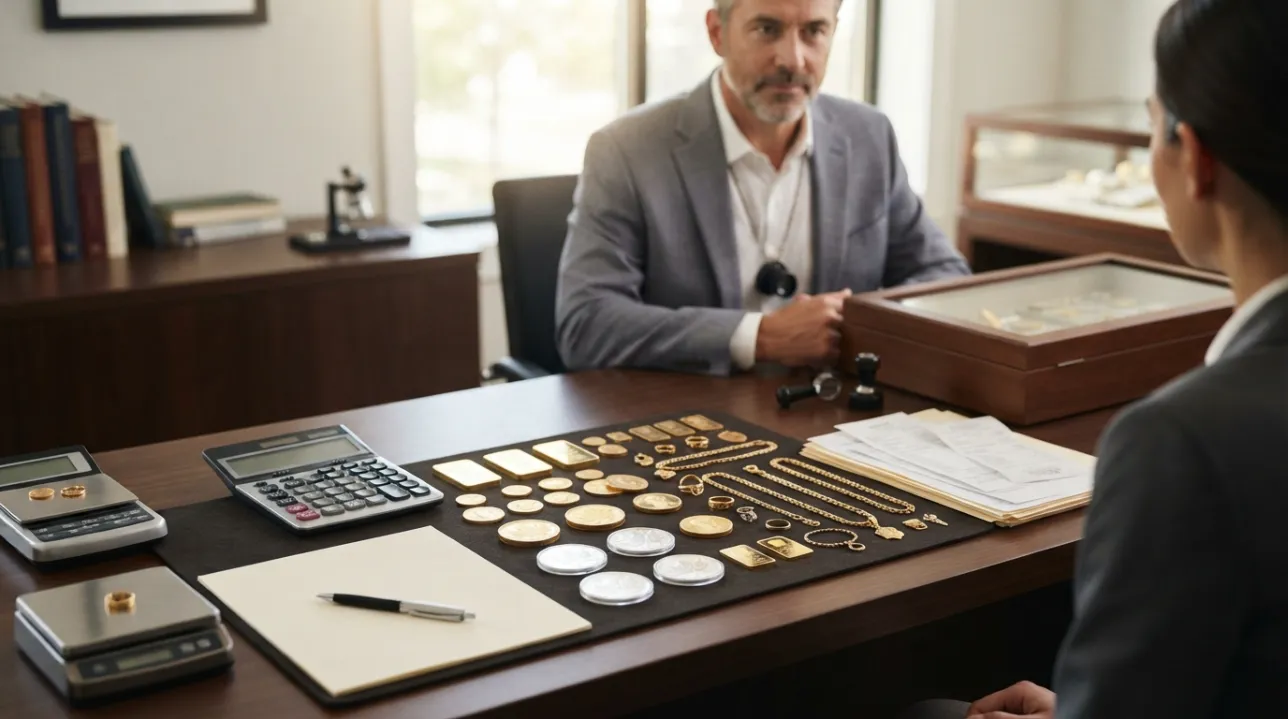
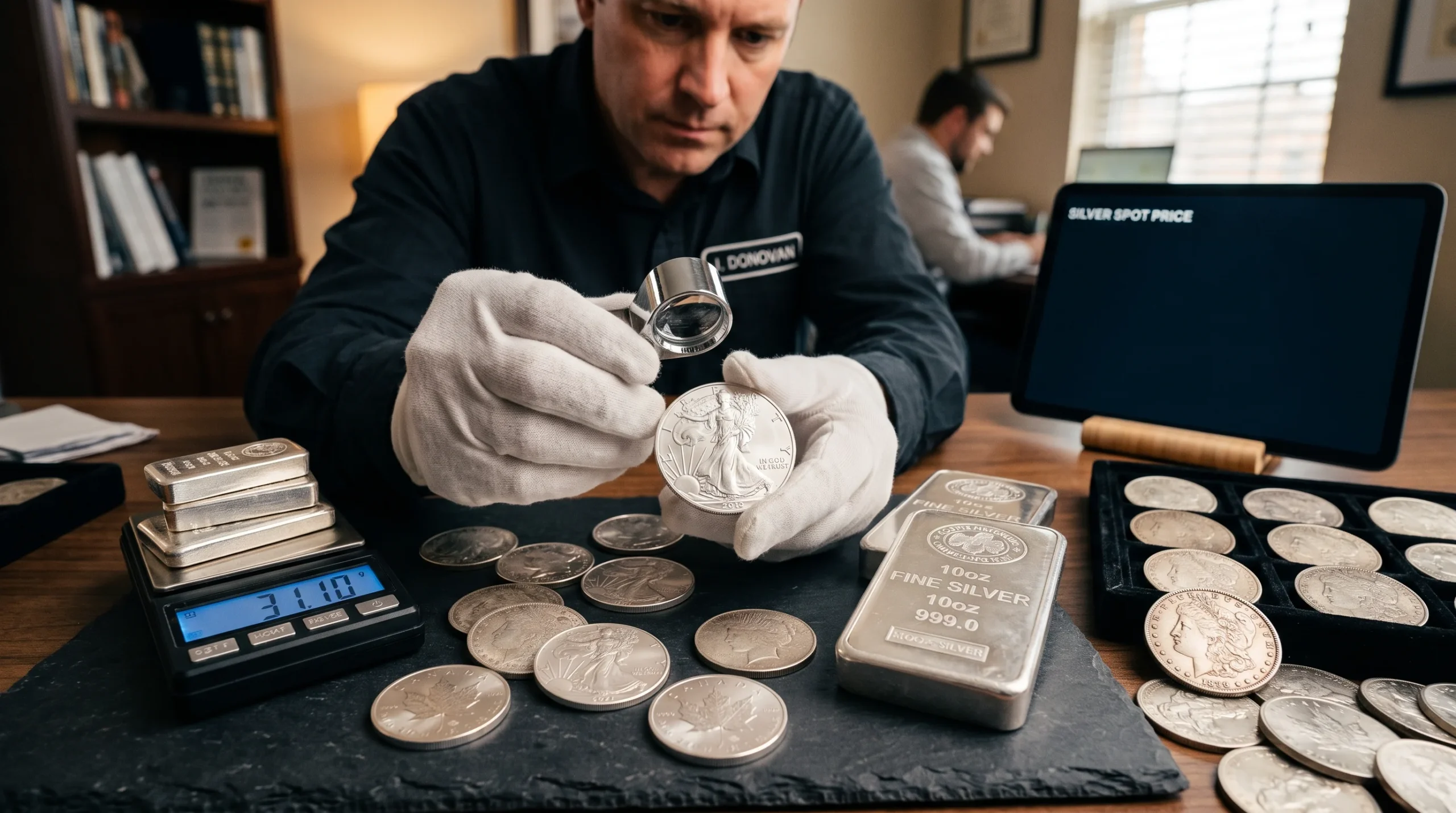
The value of a gold or silver item based purely on its metal content, calculated as weight multiplied by purity multiplied by the current spot price. Melt value is the baseline floor for any precious metal item, before condition or collector demand are considered.
Numismatic Premium
The amount a coin is worth above its melt value because of rarity, mint mark, condition, or collector demand. A common circulated coin has little or no numismatic premium; a low-mintage coin in strong condition can carry a large one.
Resale Value
What a pawnbroker estimates an item would realistically sell for in their shop. Loan offers are calculated as a percentage of this figure, not of what you originally paid.
Condition Grade
A rating of an item’s physical state. For coins, formal grading is done by third-party services and affects value significantly. For jewelry and watches, condition is usually assessed in-house.
Provenance
Documented history of ownership. Receipts, estate paperwork, or auction records can support a higher valuation on antique or collectible items.
Authentication
Verifying that an item is genuine. For precious metals this means purity testing; for watches and designer goods it means checking serial numbers, hallmarks, and construction details.
Precious Metals Terms
Spot Price
The current market price for one troy ounce of a metal, updated continuously during trading hours. Every gold and silver offer starts from the spot price on the day of your visit.
Troy Ounce
The standard unit for weighing precious metals, equal to about 31.1 grams. It is heavier than the standard ounce used for food, which is about 28.35 grams.
Purity (Fineness)
How much of an item is actually the precious metal, expressed either in karats (for gold) or as a decimal fineness. 14K gold is roughly 58.3% pure gold; .999 fine silver is 99.9% pure.
Karat
A unit measuring gold purity out of 24 parts. 24K is pure gold, 18K is 75% gold, 14K is about 58.3%, and 10K is about 41.7%.
Bullion
Precious metal valued by weight and purity rather than by collectibility, typically in bar, round, or coin form.
Junk Silver
A common industry term for circulated U.S. coins minted with 90% silver content, valued for their silver rather than for rarity. The name refers to the lack of collector premium, not to poor quality.
Hallmark
A stamp on a metal item indicating its purity, and sometimes its maker or country of origin. A hallmark is a starting point for authentication, not proof on its own, since stamps can be faked.
Gold-to-Silver Ratio
How many ounces of silver equal the value of one ounce of gold at current prices. Analysts use it to compare whether one metal is relatively over- or under-valued against the other.
Pawn Loan Terms
Collateral
The item you leave with the pawnbroker to secure a loan. If the loan is not repaid, the collateral is forfeited and becomes the shop’s property to sell.
Collateral Loan
A loan secured by an item rather than by your credit history or income. Pawn loans are collateral loans, which is why they require no credit check.
Pawn Ticket
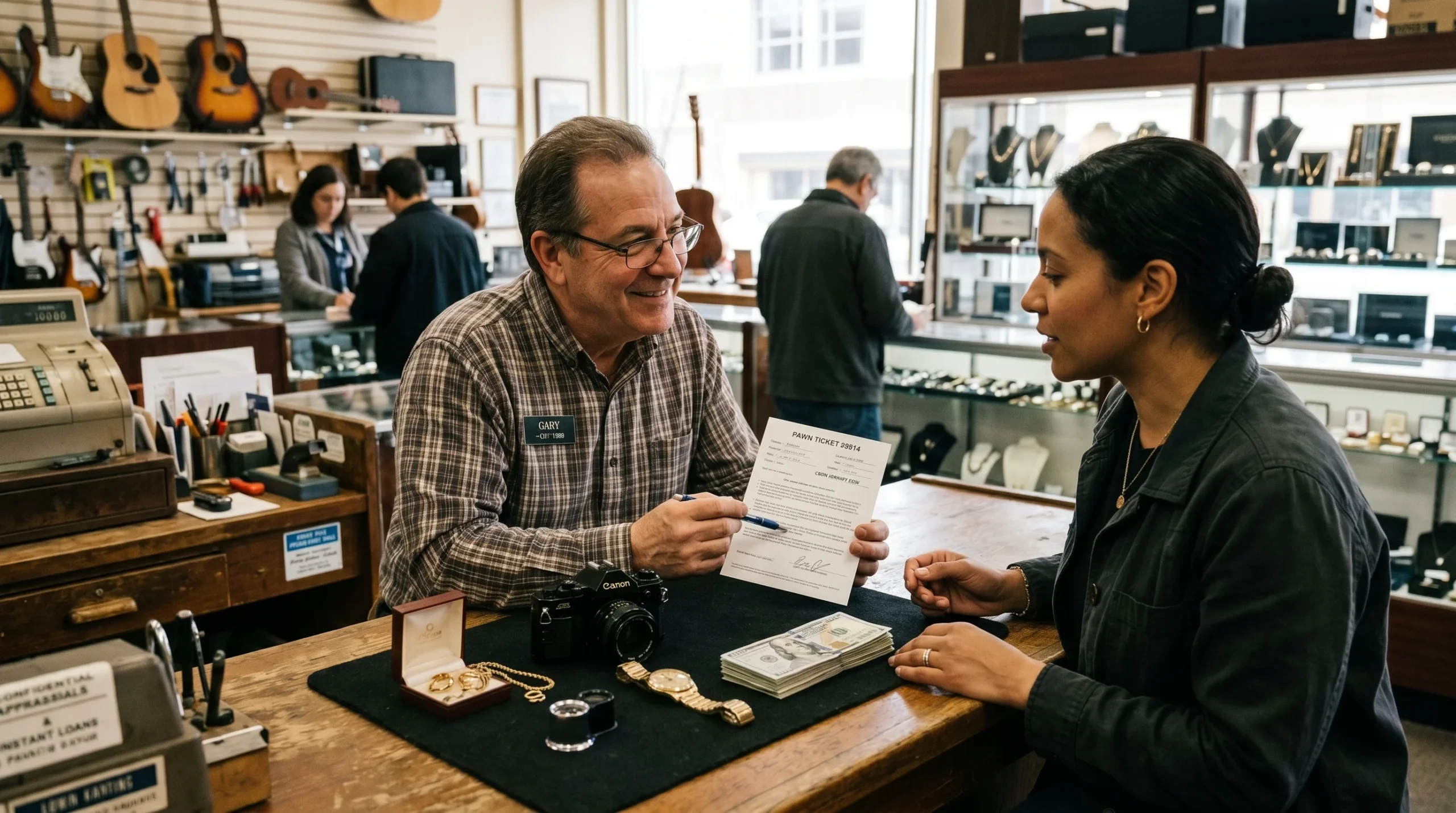
The written contract recording your loan: the item description, the amount loaned, the interest rate, the fees, and the date your loan is due. Keep it safe, since it is the primary proof of your right to reclaim the item.
Pledgor
The legal term for the customer pawning an item. The pawnbroker is the pledgee.
Redemption
Repaying the loan plus accrued interest and fees to get your item back. Redeeming is the outcome for most pawn loans nationally.
Redemption Period
The window of time you have to redeem your item before it can be forfeited and sold. The length is set by state law and by the terms on your pawn ticket. Massachusetts has its own statutory rules, covered in detail in our guide to how pawn loans work under Massachusetts law.
Forfeiture
What happens when a loan is not repaid within the redemption period. The pawnbroker keeps the item, and you owe nothing further, since the loan was fully secured by the collateral.
Extension (or Renewal)
An agreement to extend your redemption period, usually by paying the interest accrued so far. Not every shop offers extensions, so ask before your due date rather than after.
Loan-to-Value
The percentage of an item’s estimated resale value offered as a loan. Pawnbrokers set this below full value to protect themselves if an item is forfeited and has to be sold.
Outright Sale
Selling an item to the shop for a one-time payment instead of borrowing against it. A sale usually pays more upfront than a loan, because you give up the right to get the item back.
Terms You Will See on Paperwork
Principal
The amount of money actually loaned to you, separate from interest and fees. When you redeem an item, you repay the principal plus whatever has accrued.
Accrued Interest
Interest that has built up on your loan since the day it was issued. Most pawn shops calculate it monthly, so redeeming early usually costs less than waiting until the deadline.
Service Fee
A charge some shops apply on top of interest, often covering storage and insurance of your item while it is held. It should be listed separately on your pawn ticket rather than folded silently into the total.
Grace Period
Extra time some shops allow past the official due date before an item is considered forfeited. Not all shops offer one, and it is not always required by law, so confirm rather than assume.
Buy-Back
An arrangement where you sell an item outright but the shop agrees you may repurchase it within a set window, usually at a higher price. This is a sale with a repurchase option, not a loan, and the consumer protections differ.
Why These Terms Matter Before You Walk In
Most disputes at a pawn counter come from a mismatch in expectations rather than a bad offer. Someone hears a number, assumes it reflects what they paid for an item, and is surprised when it reflects resale value instead.
Knowing the vocabulary lets you ask precise questions: what spot price are you using, is this loan-to-value or an outright purchase offer, and does this coin carry any numismatic premium above melt. Those three questions alone will clarify most offers.
Putting These Terms to Use at Our Brockton Shop
We use this vocabulary every day. Ideal Jewelry and Loan has operated as a licensed pawnbroker at 242 Main St. in Brockton since 1955, appraising gold, silver, coins, jewelry, and watches.
If any of these terms come up during your appraisal and you would like them explained as they apply to your specific item, ask. Walking through how we arrived at a number is part of the process, not a favor, and you should expect that from any licensed shop.
You can reach us at 1-508-583-8448 with a question about a particular item before coming in. We are open Monday through Friday 9am to 5pm and Saturday 10am to 4pm, serving Brockton along with Stoughton, Quincy, Easton, and West Bridgewater.
Frequently Asked Questions
What does melt value mean at a pawn shop?
Melt value is what a gold or silver item is worth based only on its metal content, calculated as weight times purity times the current spot price. It is the baseline floor before any collector premium is added.
What is a pawn ticket and why does it matter?
A pawn ticket is the written contract recording your loan amount, interest rate, fees, item description, and due date. It is the primary proof of your right to reclaim your item, so it should be kept somewhere safe.
What is the difference between spot price and melt value?
Spot price is the market price for one troy ounce of a metal. Melt value applies that price to your specific item by factoring in its actual weight and purity.
What does it mean if a coin has a numismatic premium?
It means the coin is worth more than its metal content alone, because of rarity, mint mark, condition, or collector demand. Common circulated coins usually have little to none.
What happens if I lose my pawn ticket?
Contact the shop as soon as possible. Most licensed pawnbrokers have a documented process for verifying your identity against their transaction records, though it typically requires photo ID and may take longer than a normal redemption.
Is 14K gold worth less than 24K gold?
Yes, per gram. 14K gold is about 58.3% pure gold while 24K is essentially pure, so a gram of 14K contains substantially less gold and is valued accordingly.