
What Pawn Shops Don’t Accept (And Why)
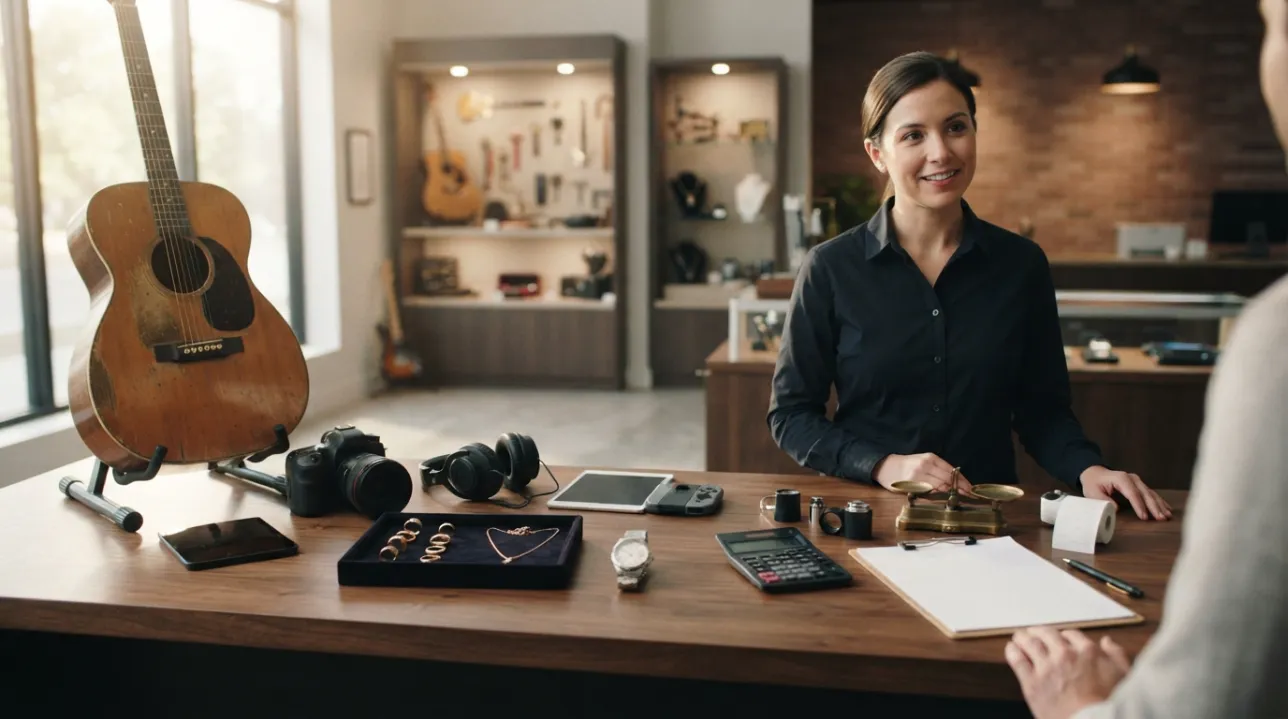
Pawn shops turn down items for three reasons: the law prohibits it, the item cannot be authenticated, or it has no reliable resale market. Knowing which category your item falls into saves you a trip and tells you whether a different shop would say yes.
Key Takeaways
- Most refusals come down to legality, authentication difficulty, or weak resale demand.
- Pawnbrokers are legally required to verify identity and record transactions, which rules out anything with unclear ownership.
- Items that depreciate fast, like most consumer electronics, are often declined or valued very low.
- A refusal at one shop does not always mean a refusal everywhere, since specialties differ.
Items Pawn Shops Cannot Legally Accept
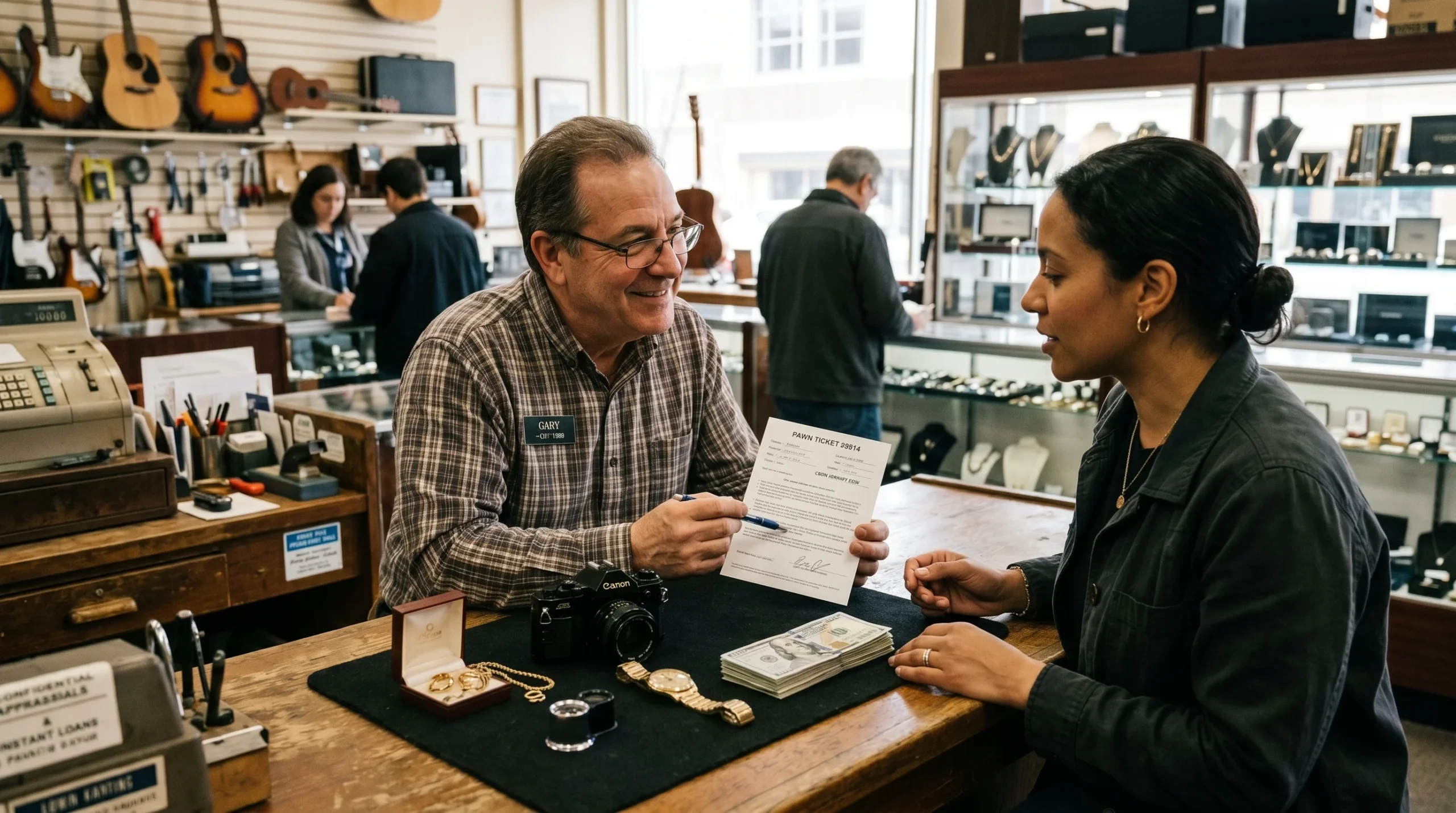
Anything you cannot prove you own. Licensed pawnbrokers are required to record transaction details and verify the identity of every customer, and those records are available to law enforcement. A shop that suspects an item is stolen will decline it, and it is not being difficult, it is following the law.
Firearms, in most shops. Dealing in firearms requires a separate federal license and additional state compliance. Many pawnbrokers simply do not carry that license, which makes firearms an automatic no.
Prescription medication and medical devices. These are regulated and cannot be resold by a pawn shop under any circumstances.
Recalled or safety-defective goods. Reselling a recalled product creates liability, so shops decline them even when the item still functions.
Items with removed or altered serial numbers. A missing serial number makes an item impossible to verify and is often a legal red flag in itself.
Items That Are Too Hard to Authenticate
Loose gemstones without certification. Diamonds and colored stones are difficult to grade accurately without lab equipment. Many shops will accept a certified stone or a stone set in a piece they can appraise as jewelry, but decline a loose, uncertified stone. Our guide on selling and pawning diamonds in Brockton covers what documentation helps.
Designer goods with no provenance. Counterfeits in the luxury handbag and watch market are sophisticated enough that shops without a specialist on staff will decline rather than risk it.
Unmarked precious metal items. A hallmark is not proof on its own, but its complete absence combined with an unusual weight or color makes testing slower and can lead to a decline on low-value items where testing is not worth the time.
Artwork and antiques outside the shop’s expertise. Valuing a painting or antique furniture requires specialist knowledge. A general pawn shop that cannot assess it will usually pass rather than guess.
Items With No Reliable Resale Market
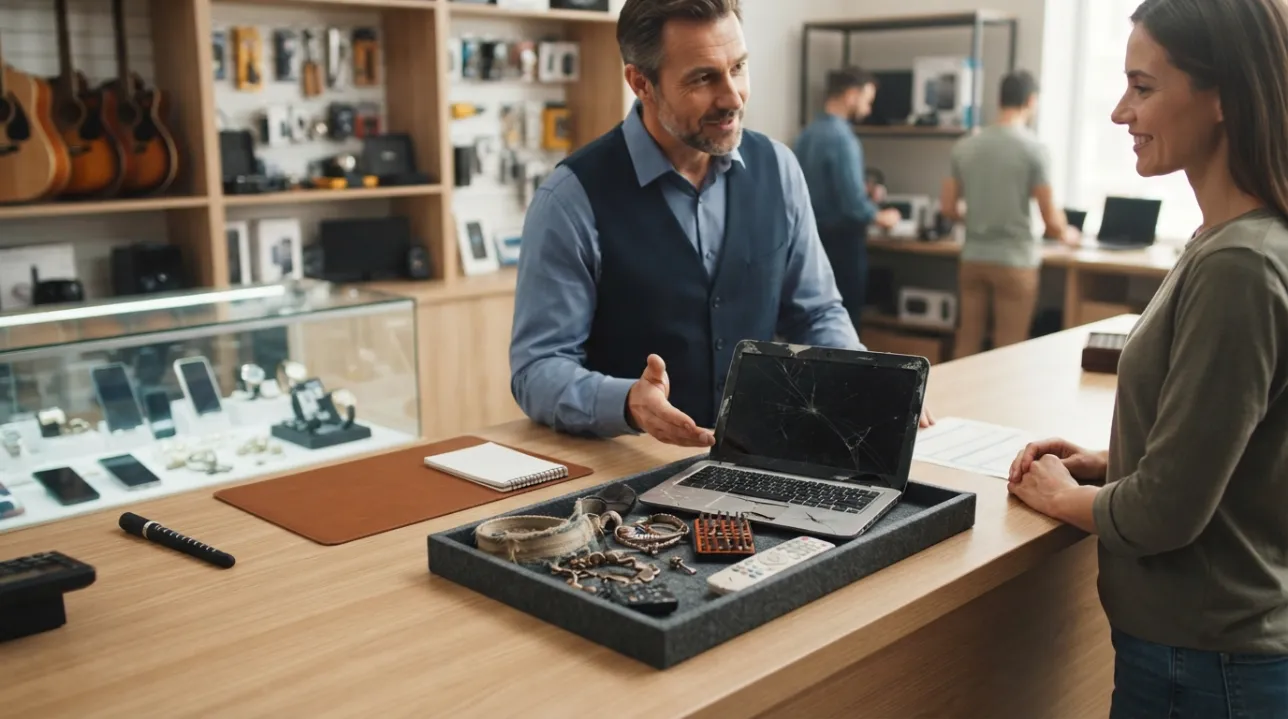
Most older consumer electronics. TVs are the classic example. Large, fragile, expensive to store, and dropping in value every month. Many shops decline TVs outright or offer very little. Newer, compact, in-demand electronics tend to fare better.
Printers, desktop towers, and obsolete tech. Low resale demand and high storage cost make these consistently unattractive.
Used mattresses, car seats, and helmets. These carry hygiene or safety restrictions on resale in many jurisdictions.
Opened cosmetics, perfume, and personal care items. Generally not resell able.
Clothing, with narrow exceptions. Ordinary used clothing has almost no pawn value. Some shops make exceptions for authenticated designer pieces, furs, or leather in excellent condition.
Mass-market collectibles. Commemorative plates, common sports cards, and figurines produced in large quantities rarely have the resale demand people expect, regardless of what a price guide suggests.
Items missing key components. A power tool without its battery and charger, or a camera without a lens, is worth a fraction of the complete set.
Why a Pawnbroker Says No: The Business Logic
A pawn loan is secured entirely by the item. If the loan is not repaid, the shop must be able to sell that item to recover the money. So every decision comes down to one question: can this be sold, reliably, at a predictable price, within a reasonable time?
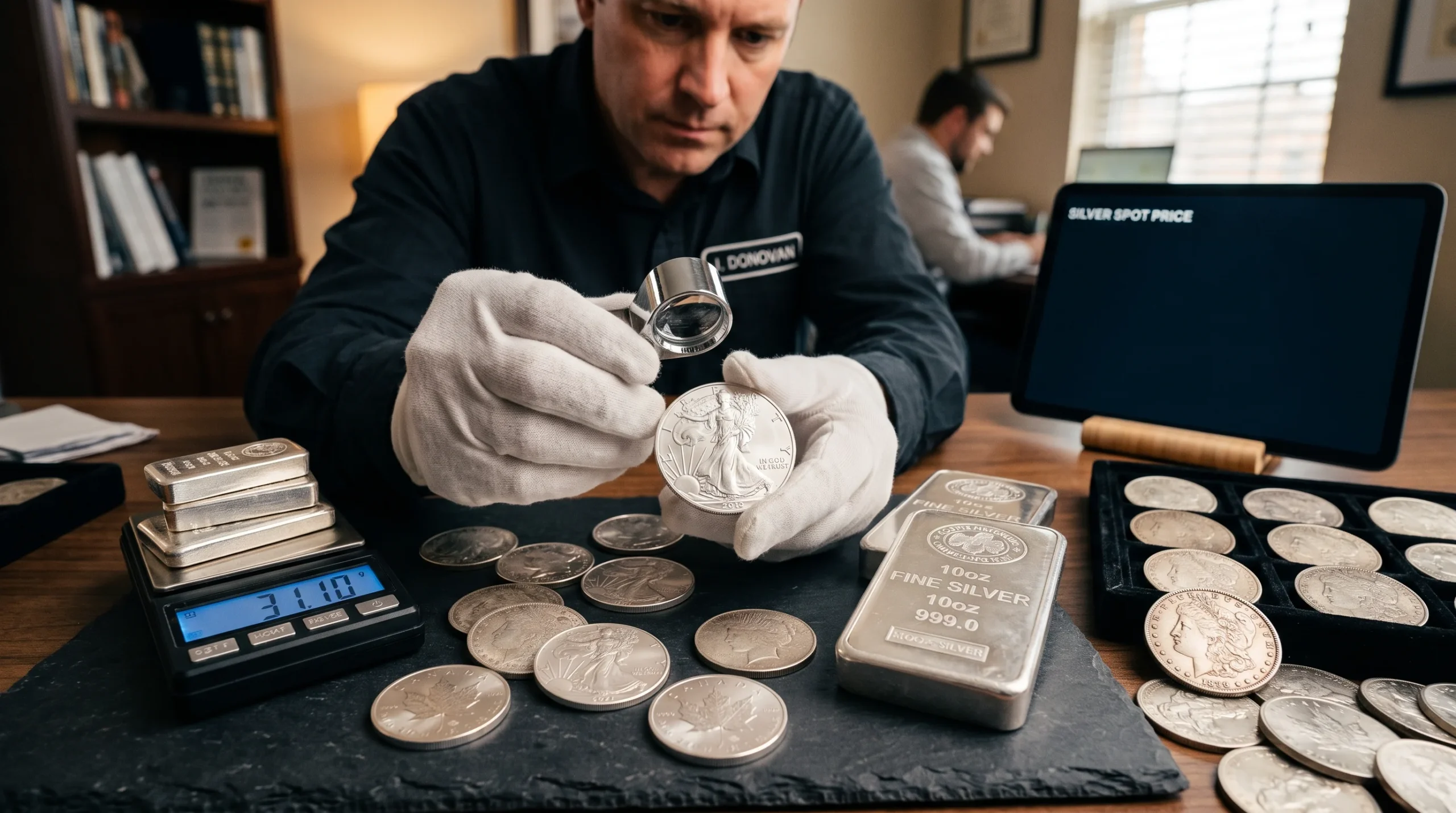
That framing explains most refusals. Gold and silver pass easily because they have a transparent daily price and are easy to test. A four-year-old television fails because its value is uncertain, dropping, and it occupies significant floor space while it waits for a buyer.
It also explains why storage cost matters. A small, valuable item is cheap to secure; a large, low-value item costs the shop money every day it sits there.
What to Bring Instead
If your item is on the decline list above, these categories are consistently accepted at most shops:
- Gold and silver jewelry, in any condition, including broken pieces
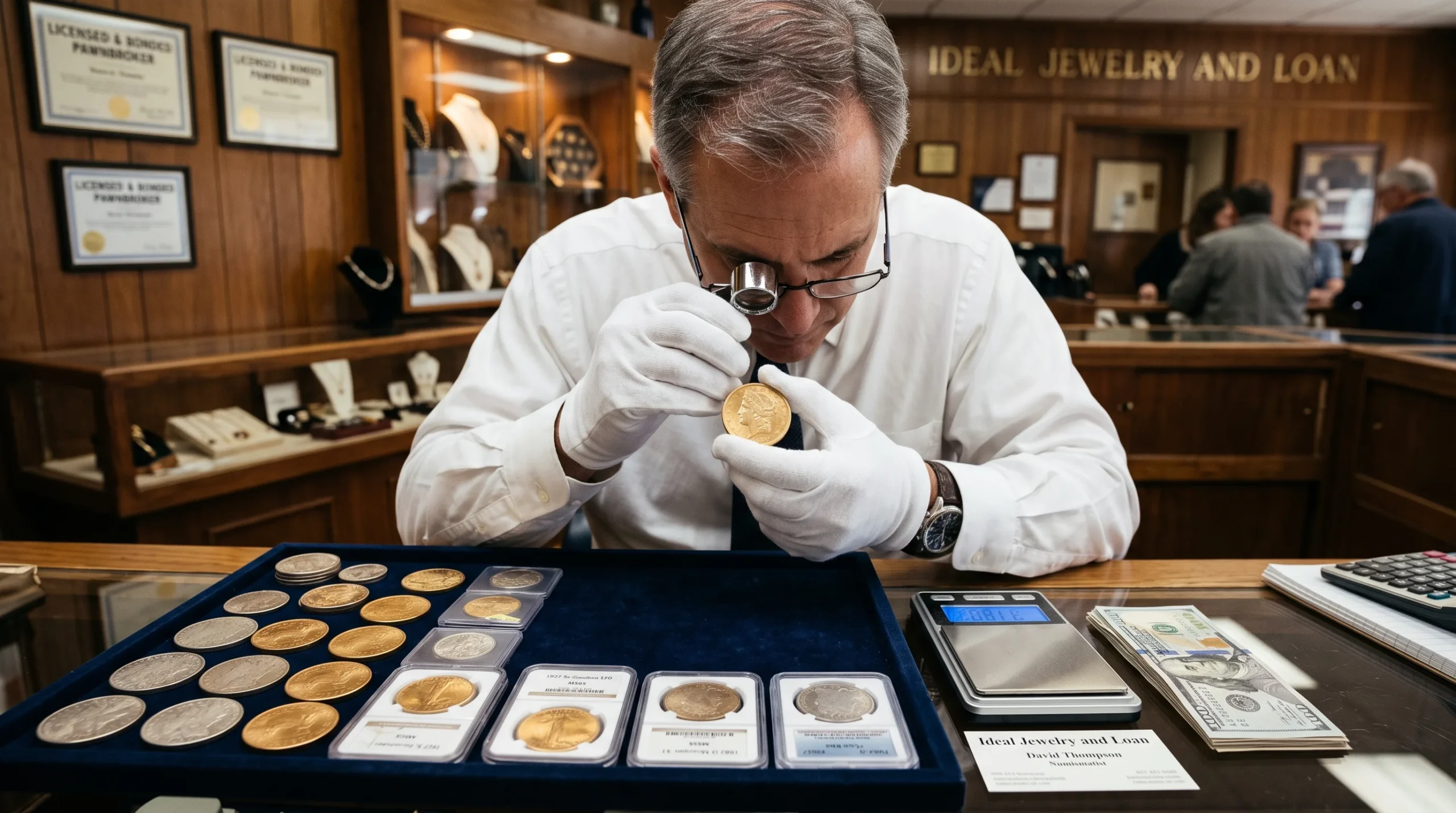
- Gold, silver, and platinum coins and bullion
- Diamonds set in jewelry, particularly with certification
- Brand-name watches in working condition, ideally with box and papers
- Quality musical instruments
- Professional-grade power tools, complete with accessories
- Current-generation, in-demand electronics in working order
For a fuller breakdown, see our guides on what you can pawn and types of items accepted for pawn loans.
Items That Get Declined for Surprising Reasons
Gold-plated and gold-filled jewelry. These contain a thin layer of gold over a base metal, and the recoverable gold content is usually too small to be worth processing. A piece can look identical to solid gold and still be declined, which is one of the more common disappointments at the counter.
Sterling silver plate versus solid sterling. Silver-plated flatware and serving pieces have very little recoverable silver. Solid sterling, usually marked .925, is accepted readily. The two are easy to confuse by appearance alone.
Watches that do not run. A non-working watch may still be accepted if the brand carries enough value to justify repair, but most mid-range non-running watches are declined because servicing costs more than the resale price supports.
Jewelry with synthetic or lab-created stones. These have real aesthetic value but far less resale value than natural stones, and some shops decline pieces where the stone is the main value driver.
Items with sentimental rather than market value. Class rings, engraved pieces, and personalized jewelry are usually valued only for metal content, because the engraving makes them hard to resell to anyone else.
Timing Can Affect Whether an Item Is Accepted
Seasonality plays a real role in what shops want. A shop holding a lot of unsold inventory in one category may temporarily decline more of that category, regardless of the specific item’s quality.
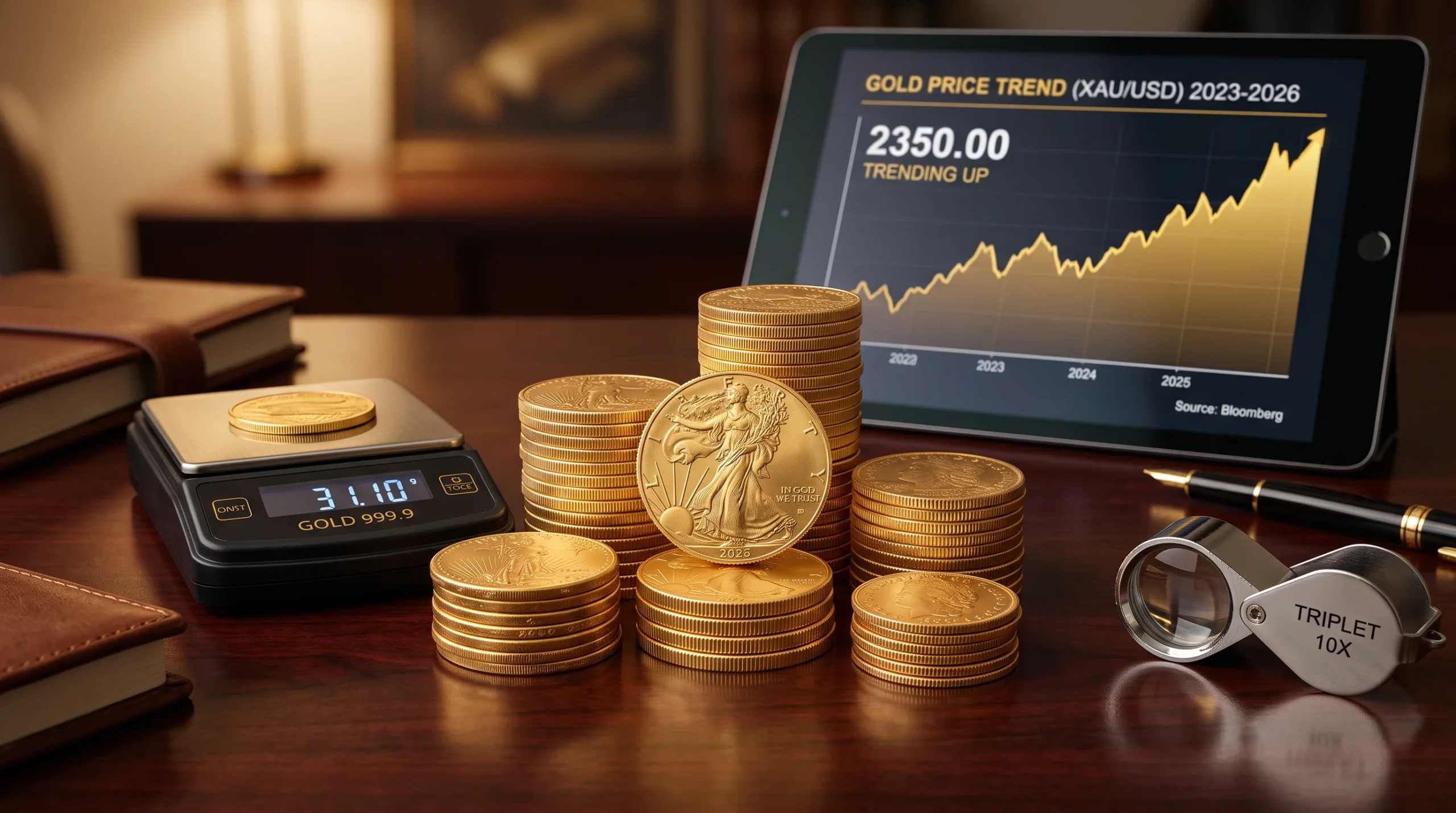
The same applies to metal prices. When gold and silver prices are high, shops are typically more eager to take precious metal items because they move quickly. When a category is slow, the same item might get a lower offer or a decline from the same shop that accepted one last month.
If you were declined months ago, it can be worth asking again, particularly for precious metals where market conditions have shifted.
Does a Refusal at One Shop Mean a Refusal Everywhere?
No. Pawn shops specialize. A shop focused on jewelry and precious metals may decline a saxophone that a shop with a musical instrument clientele would happily take. A shop with a watchmaker on staff can authenticate luxury timepieces that a general shop would pass on.
If your item was declined for a business reason, meaning weak resale demand or lack of expertise, it is reasonable to try a shop that specializes in that category. If it was declined for a legal reason, no licensed shop will accept it.
Check With Us Before You Make the Trip
Calling ahead is the simplest way to avoid carrying something in for nothing. Describe the item, including brand, model, condition, and whether you have any documentation, and we can usually tell you over the phone whether it is a category we take.
Ideal Jewelry and Loan has operated as a licensed pawnbroker at 242 Main St. in Brockton since 1955. Call us at 1-508-583-8448 before you come in. We are open Monday through Friday 9am to 5pm and Saturday 10am to 4pm, serving Brockton, Stoughton, Quincy, Easton, and West Bridgewater.
If an item is not something we can accept, we would rather tell you that on the phone and explain why than have you make the trip.
Frequently Asked Questions
Can you pawn a TV?
Many pawn shops decline televisions or offer very little for them, because TVs are large, fragile, expensive to store, and lose value quickly. Smaller, current-generation electronics generally receive better offers.
Why won’t a pawn shop take my item?
The three common reasons are legal restrictions, inability to authenticate the item, or a weak resale market for that category. Asking which reason applies tells you whether another shop might say yes.
Do pawn shops accept broken jewelry?
Yes, in most cases. Broken gold and silver jewelry still has full melt value based on its metal weight and purity, so damage matters far less than it does for items valued on condition.
Can I pawn something that is not in my name?
Licensed pawnbrokers are required to verify the identity of the person pawning an item and record the transaction. If you cannot demonstrate that the item is yours to pawn, expect it to be declined.
Do pawn shops take clothing?
Ordinary used clothing has very little pawn value and is usually declined. Authenticated designer pieces, furs, or high-quality leather in excellent condition are occasional exceptions.
Will a pawn shop accept a firearm?
Only shops holding the appropriate federal firearms license can accept firearms, and many pawnbrokers do not hold one. Check directly with the shop before bringing one in.